Or why Bitcoin’s electricity bill is the whole point
When I was six years old, my four brothers and I decided to hoist the youngest, Tommy, in a cardboard box fourteen feet into the air off the limb of a tree. None of us were engineers, so nobody thought about gravity or the structural integrity of cardboard. Just as my mother came outside to tell us to stop, the bottom of the box gave out, and Tommy came with it. Being hard-headed Irish, nobody was injured, and everyone was embarrassed.

Gravity didn’t ask whether we believed in it. It just showed up.
I didn’t see gravity that afternoon. I saw my little brother on the ground looking up at a box with no bottom. But I never questioned gravity again, and neither did Tommy. We didn’t need to see the force. We saw what it did.
That’s worth sitting with, because it answers the single biggest objection people raise when you try to explain Bitcoin to them: “But I can’t see it.”
You can’t see gravity either, but you trust it enough to walk downstairs in the morning. You can’t see the electricity behind your walls, but you trust it enough to plug your phone in at night. You’ve never once watched a digit physically move from your employer’s bank to yours, but you trust that your paycheck showed up on Friday. We trust invisible things constantly. We just need a reason to.
Last week we talked about mining, and what it actually means. Computers compete to earn the right to add the next page to Bitcoin’s global ledger. The first one to solve the problem gets to write that page and gets paid for doing it. Simple enough.
But that raises a fair question. Why should you trust the page they wrote?
This is where Proof-of-Work comes in. And the best way to understand it is to look at something you already trust without thinking about it.
Look at the Hoover Dam.
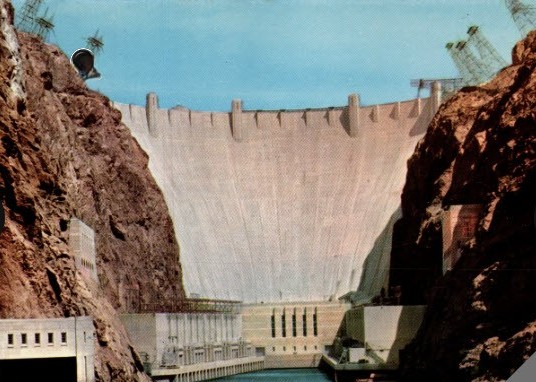
Nobody questions whether the Hoover Dam is real. You can see it. You can touch it. But the reason you trust it has nothing to do with seeing it. You trust it because you understand, even if only intuitively, that something that massive required an enormous amount of energy, labor, and material to build. Nobody faked the Hoover Dam. Nobody woke up one morning and found it there by accident. The work is embedded in the thing itself, and that work is what makes it trustworthy.
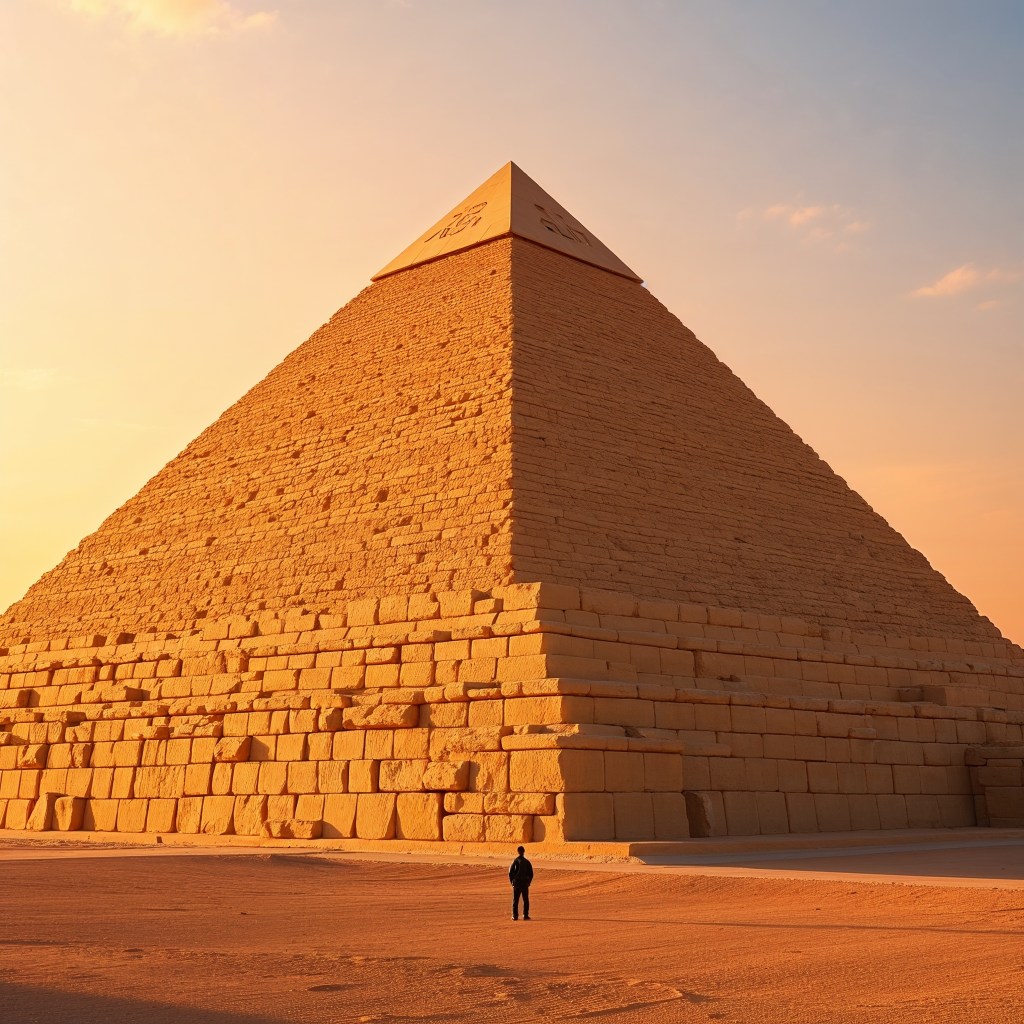
The Pyramids at Giza are the same story, just older. Twenty years of labor. Two million blocks of stone. You look at them and your brain immediately does the math, even if you never studied engineering. Something this big, this permanent, this undeniable, required real effort in the real world. The proof is the structure. The structure is the proof.
This is exactly what Bitcoin’s Proof-of-Work does.
When a miner solves that problem and adds a new page to the ledger, the solution itself is evidence that real energy was spent in the real world. Not theoretical energy. Not pretend energy. Actual electricity, consumed and gone, that can never be recovered, reversed, or reused. Every page in Bitcoin’s ledger carries that stamp. The network can look at any page and verify, independently and instantly, that somebody paid a real cost to write it.
That spent energy is Bitcoin’s concrete. You can’t see it the way you can see the Hoover Dam. But you can verify it, which turns out to be more reliable than eyesight. Your eyes can be fooled. Math can’t.
This is what makes Bitcoin different from everything else in the digital world. A photograph can be copied for free. A document can be duplicated with a keystroke. An email costs nothing to send. In the digital world, copies are free, and that’s a problem if you’re trying to build something trustworthy. If copying is free, then cheating is free.
Proof-of-Work makes cheating expensive. If someone wanted to go back and tamper with a page in Bitcoin’s ledger, they wouldn’t just have to rewrite that page. They’d have to redo all the work for every page written after it, which means spending more electricity than all the honest miners on the network combined, in real time, while the network keeps moving forward. It’s not impossible the way magic is impossible. It’s impossible the way rebuilding the Hoover Dam with your bare hands while the river is still running is impossible. The physics don’t work.
And this is the right place to talk about something you’ve probably already heard: Bitcoin uses a lot of energy.
This is true. It does. And for a lot of people, that’s where the conversation stops. They hear that Bitcoin uses as much electricity as some small countries and they think, “That’s wasteful.” I understand the reaction. It sounds bad if you don’t ask the next question.
The next question is: what do you get for that energy?
Nobody walks up to the Hoover Dam and says, “What a waste of concrete.” They understand the concrete is there for a reason. It holds back the Colorado River and generates power for millions of people. The cost is real, and so is the value.
Bitcoin’s energy cost works the same way. That electricity isn’t being burned for nothing. It’s the thing that makes the ledger tamper-proof. It’s the reason no government, no corporation, no hacker, and no insider can go back and rewrite the record. Every kilowatt spent is a kilowatt invested in making the system honest. Take away the energy and you take away the security. You’d have a ledger anyone could edit, which is not a ledger at all. It’s just a spreadsheet.
It’s also worth noting what that energy is actually being compared to. The global banking system, the one most of us use every day without thinking about it, consumes an enormous amount of energy too. The data centers, the branch offices, the armored trucks, the ATMs, the clearing houses, the compliance departments, all of it runs on electricity, gasoline, and human labor. Nobody publishes that number on the front page because we’ve decided that system is normal. Bitcoin gets scrutinized because it’s new and because its energy use is visible and measurable on a public network. The legacy system’s energy use is hidden across a million buildings in a hundred countries, and nobody is adding it up.
That doesn’t mean the question isn’t worth asking. It means the question should be asked fairly. What does the world get for Bitcoin’s energy? It gets a financial ledger that is open to everyone, controlled by no one, and secured by physics instead of promises. Whether that’s worth the electricity is a reasonable discussion. But it’s a different discussion than “Bitcoin wastes energy,” which isn’t a question at all. It’s a conclusion dressed up as a concern.
So when someone tells you that Proof-of-Work is wasteful, you now have a way to think about it. The energy is not a bug. The energy is the feature. It’s the thing that makes the ledger trustworthy in a world where digital information can otherwise be copied, edited, and manipulated for free. Proof-of-Work is the reason that Bitcoin’s ledger, unlike every other digital record in existence, actually means something.
You still can’t see it. But Tommy can tell you, from personal experience, that not everything real needs to be visible. Sometimes the proof is in what happens when you ignore it.
Tune in next week when we talk about “Keys and Wallets,” and why owning Bitcoin is nothing like having money in a bank, and why that’s exactly the point.
If you want to go deeper on the energy question, the Cambridge Centre for Alternative Finance publishes real-time data on Bitcoin’s electricity consumption. If you want to compare it to the traditional financial system, good luck finding a single number. That asymmetry tells you something.
If you’re ready to jump into the bloody details, have the time, and aren’t frightened off by the language, I recommend Bitcoin and Cryptocurrency Technologies, which is detailed and academic. The text may be available as a free download somewhere. Google it.

Leave a comment