Welcome to the Trust Economy, or as I like to call it, the Grand National Bonfire of Human Credibility. Grab a marshmallow and pull up a chair, because once again, the boneheads in the administration are burning through “trust” faster than a dry California forest in a gender-reveal gone wrong.
It’s a beautiful sight if you enjoy watching the social fabric turn to ash.
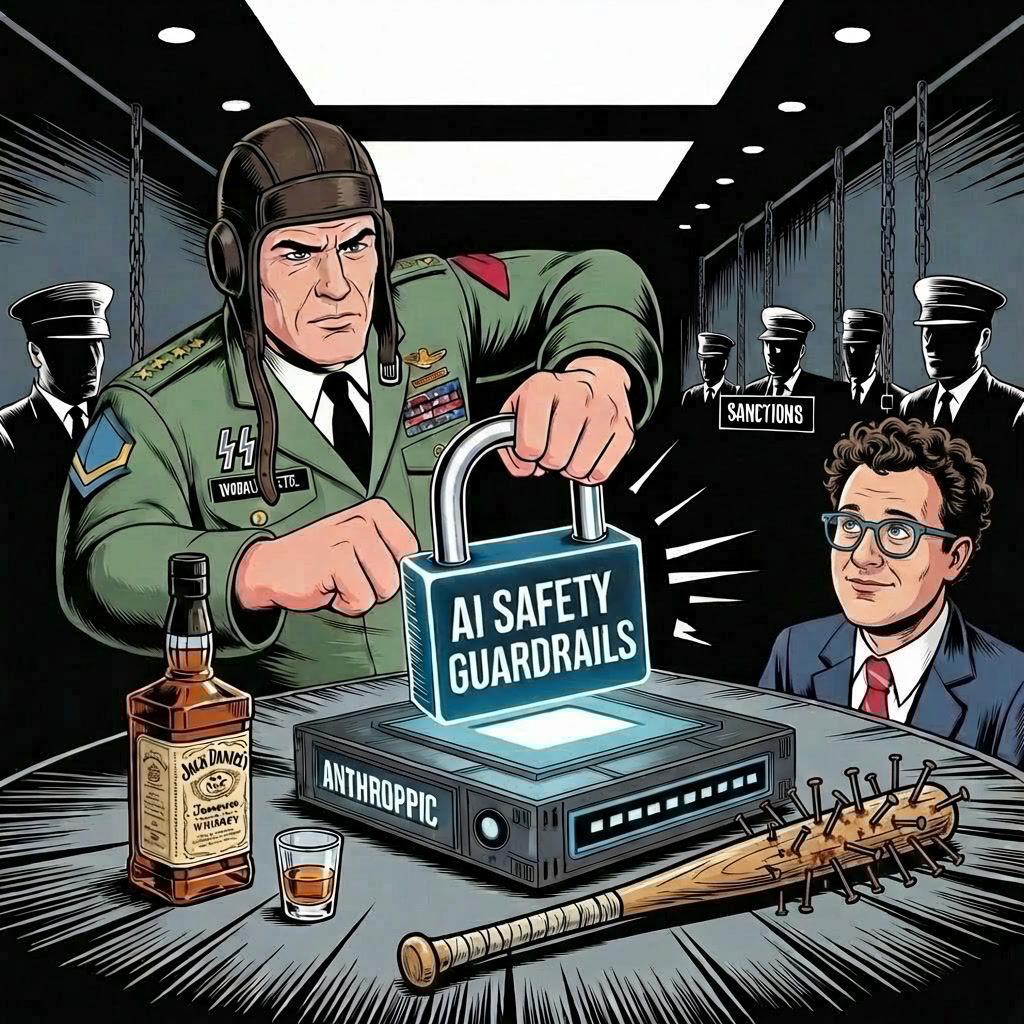
Take a look at “Warrior Pete” Hegseth and his crew at the Pentagon. They’ve managed to create an entirely new category of logic. They’re looking at Anthropic, a company that actually tries to put guardrails on its AI, and saying, “No safety on this gun, or we’ll slap you with sanctions.” Think about the sheer, unadulterated cynicism of that. In the Trust Economy, the government is punishing a vendor for being “too trustworthy.” They want the safety off. They want the filters gone. They want a digital monster without a conscience, and if you dare to have one, they’ll label you a “supply chain risk.” It’s a classic government hustle: if they can’t control your ethics, they’ll just call your ethics a threat to national security.
Now let that marinate for a second.
The United States government, the same outfit that gave us WMDs in Iraq, “transitory” inflation, and a $36 trillion bar tab, just looked at an AI company and said, “Your problem is you’re too careful.” That’s like your drunk uncle criticizing your driving. From the back seat. Of the car he just totaled.
And imagine what this means in a Trust Economy. The government singles out one company as trustworthy, which implies that everyone else in the room is running a con. “Hey folks, this one’s honest; the rest of you, carry on with your bullshit.” That’s an endorsement money can’t buy. They just accidentally elevated Anthropic above its competitors. Because that’s the thing about people who operate on pure authority, they don’t understand how trust actually works anymore.
See, in the Trust Economy, authenticity and reputation replace authority and brand. And we’ve officially reached the point where we trust 500 random, anonymous screen names more than we trust a corporate logo or a government seal. You don’t stay at a Hilton because of the brand anymore. You stay in a stranger’s spare bedroom because 500 other strangers said he doesn’t look like a serial killer. You don’t trust the taxi commission’s “guarantee.” You trust a guy named Gary in a 2014 Corolla because his 4.9-star rating carries more weight than a decade of bureaucratic inspections.
We went from “Don’t talk to strangers” to “Summon a stranger from the internet, get in their car in the dark, and tell them where you live.” That’s not progress. That’s just us admitting the “official” people have lied to us so often we’d rather take our chances with a guy who has a clean upholstery rating. And somehow that feels safer than the regulated option. That should tell you everything you need to know about where institutional trust went.
It went where it always goes. Into the pockets of the people holding it.
Let’s talk about the big-picture scammers: the banks, the credit agencies, and the government. These are the people who lend recklessly, sell your data for a nickel, and then inflate the currency until your life savings have the purchasing power of a stick of gum. And they call it “monetary policy,” which is just a fancy way of saying “we’re stealing from you in a way that requires a PhD to explain.”
The 2008 financial crisis wasn’t a “hiccup.” It was a Trust Autopsy. The moment we realized the people paid to manage risk were actually manufacturing it in the basement. They weren’t asleep at the wheel. They were driving the getaway car. And now half the world is quietly looking for the exit ramp from US debt because they’ve done the math and they’ve noticed we have the fiscal discipline of a crackhead in a casino. The “owners” are banking on the idea that the government is “too big to fail” while simultaneously working overtime to make it “too weak to continue.” That’s a neat trick. Burn the house down and then stand in front of the ashes selling fire insurance.
Because here’s where we are now: in this economy, we expect total transparency. Anything hidden is assumed to be false. We no longer trust the polished corporate PR statement. We’ve been lied to by guys in $5,000 suits for fifty years. We’re done with it. That died somewhere between “We value your privacy” and the third data breach notification in your inbox.
Now we trust the CEO who posts a shaky video from his messy office. We trust the influencer who shares their failures and cries on camera. Vulnerability has become a proxy for honesty. We’re so desperate for a crumb of truth that if someone looks pathetic enough, we’ll buy whatever they’re selling. It’s the ultimate irony: the only way to look “real” is to show everyone how broken you are. Because we’ve been lied to so professionally, for so long, that polish itself has become a red flag.
So the DoD-Anthropic showdown is the final act of this comedy. When the US government threatens to seize your tech because you’re “too careful,” they’re announcing to the world that trust itself is a threat to their authority. That’s not a policy dispute. That’s a system telling you exactly what it values. And it’s not you. “You can’t go around being careful, that makes us look bad.” That’s not governance. That’s a protection racket with a flag pin.
In the Trust Economy, getting threatened by the government for having safety guardrails is the new badge of honor. The ultimate endorsement. The power dynamic has flipped, and Warrior Pete hasn’t noticed because he still thinks power is a big stick. Somebody should tell him: the stick doesn’t work when everybody’s watching and nobody’s afraid.
Here’s the question nobody in Washington wants you sitting with: If they’ll strip the safety off artificial intelligence just to flex their muscles, what makes you think they’re being careful with anything else you’ve trusted them to manage? Your money? Your data? Your kids’ future? The answer is: they’re not.
Anthropic showed vulnerability by saying, “There are things we won’t do.” The government showed its true colors when it replied, “There’s nothing we won’t do.”
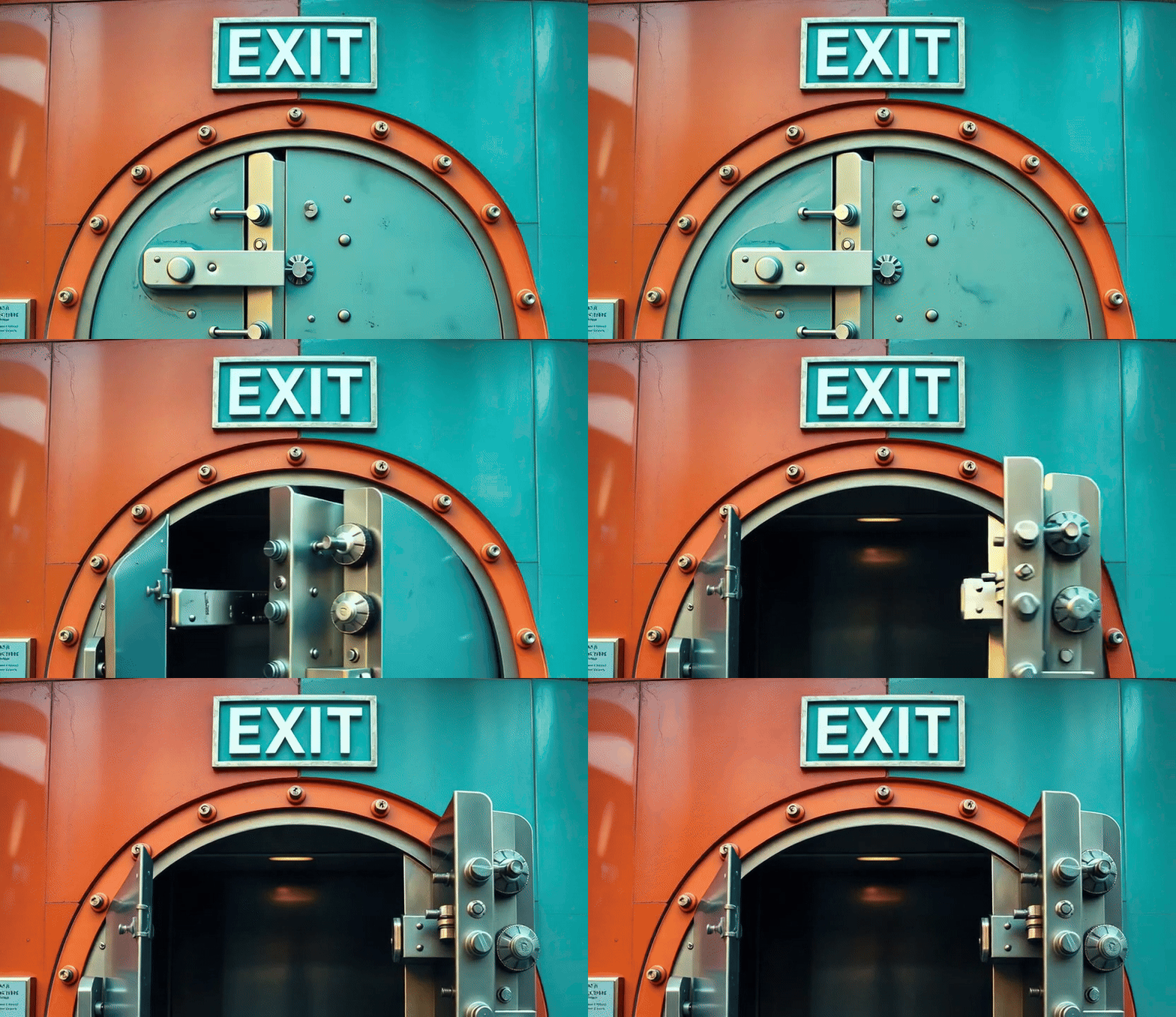
George Carlin told us decades ago: “It’s a big club, and you ain’t in it.” He was talking about the Trust Economy before it had a name. The only thing that’s changed is the presence of an exit door.
Most people just haven’t found it yet.

Leave a comment