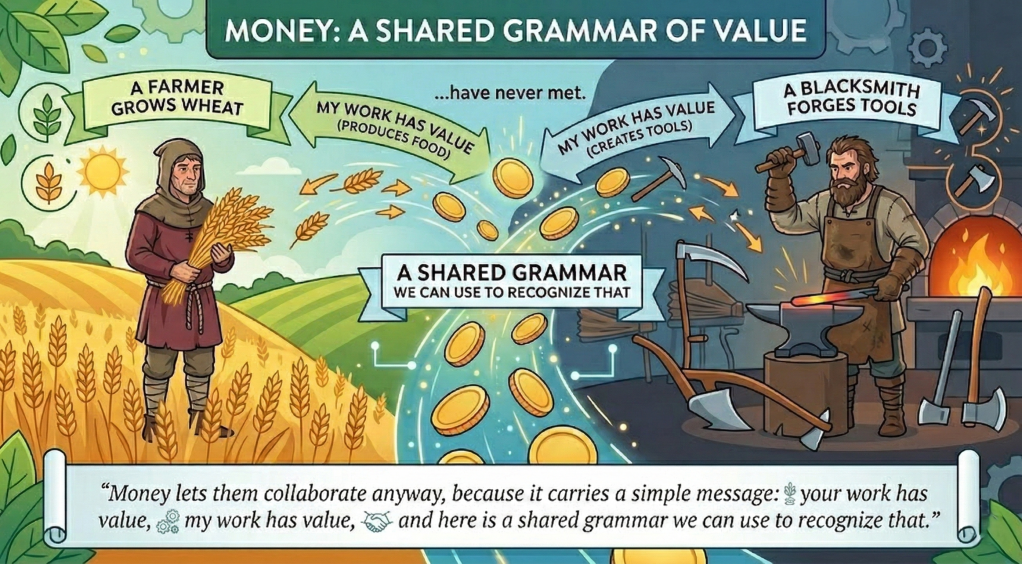
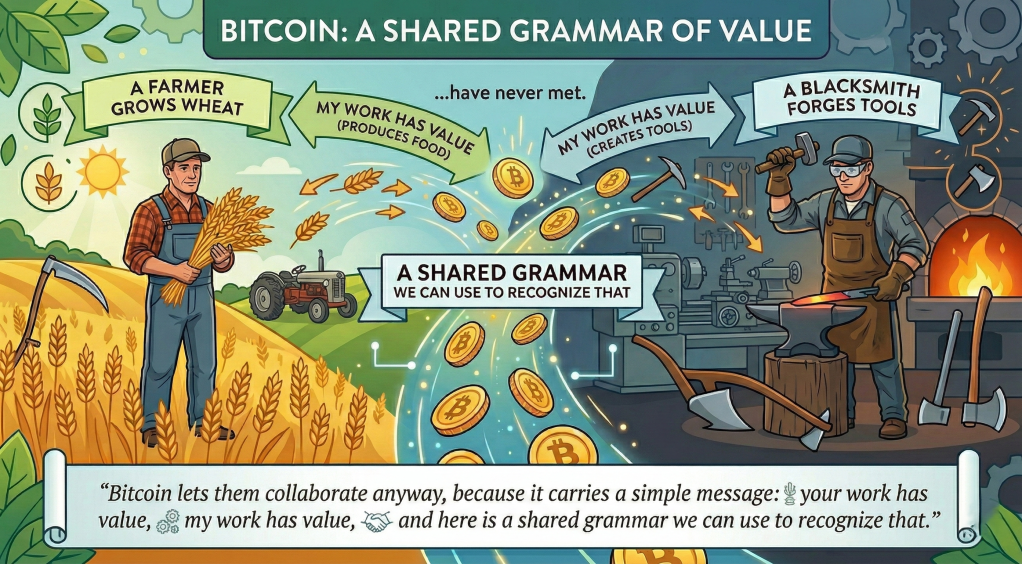
Money is a cooperative technology. That’s what it was built to do. Before it was a commodity, before it was a policy instrument, before it was a weapon, money was the language that let strangers work together without needing to trust each other personally. A farmer grows wheat. A blacksmith forges tools. They have never met. Money lets them collaborate anyway, because it carries a simple message: your work has value, my work has value, and here is a shared grammar we can use to recognize that.
This is so fundamental that we forget it. We think of money as something you earn, spend, save, invest. Something that moves between people. But before it moves, it speaks. It says: I see what you did, and it mattered.
The earliest money we know about wasn’t coins. It was ledgers. Clay tablets in Mesopotamia, roughly five thousand years ago, recording obligations within a community. This farmer contributed grain to the storehouse. This builder repaired the canal. The tablet wasn’t tracking exchanges between adversaries. It was tracking contributions among participants in a shared project called “we all survive this year.”
Money was the memory of cooperation. That’s all it was.
So what happened?
Somewhere along the way, we stopped saying “cooperation” and started saying “transaction.” And that shift wasn’t cosmetic. It was architectural.
Feel the word. Trans-action. Action across a boundary. The moment you frame money as transactional, you’ve introduced a boundary between the participants. Now there are two sides. Now there’s a buyer and a seller. Now someone got the better deal and someone didn’t. Now there’s information worth hiding, because if I know something you don’t about what we’re exchanging, I win.
The entire vocabulary of commerce lives inside this frame. Leverage. Arbitrage. Competitive advantage. Information edge. Proprietary data. Trade secrets. None of these words exist in a cooperative grammar. Every one of them is native to a transactional one.
And the transactional frame didn’t emerge because people got greedier. It emerged because someone captured the ledger.
Go back to those Sumerian clay tablets. The temple controlled them. And the moment a third party controls the memory of cooperation, that third party can edit the memory. They can add a line that says the temple is owed a percentage of every contribution. Not because the temple grew grain or dug canals, but because the temple keeps the record.
The temple becomes the first intermediary. And the intermediary needs a justification. So the framing shifts. It is no longer “we are all contributing to a shared project.” It becomes “you owe the temple, and the temple owes you, and these are separate accounts.” Two sides. A boundary. A transaction.
Cooperation doesn’t need a middleman. Transactions do. So the middleman reframes cooperation as transaction, and suddenly the middleman is essential.
Every monetary system since has repeated this move. Rome puts Caesar’s face on the coins, routing every exchange through imperial authority. Medieval Europe routes commerce through the Church and the crown. The Bank of England. The Federal Reserve. Same architecture across five millennia. A third party inserts itself into the cooperative language, reframes it as transactional, and extracts rent from the reframing.
And here is the part that matters: every time the ledger keeper gains control, secrecy follows. Not as corruption. As structure.
The temple priests knew things about the community’s obligations that the community didn’t know about itself. That information asymmetry was the source of their power. Every intermediary since has operated on the same principle. Your bank knows your balance, your debt, your payment history, your risk profile. You don’t know theirs. The asymmetry isn’t a flaw. It’s the product.
Once the grammar is transactional, secrecy becomes rational. You’d be a fool to show your hand in a negotiation. You never reveal your cost basis. You never let the other side know how badly you need the deal. The language itself teaches you to hide.
And this is where the story connects to the headlines.
Jeffrey Epstein sat exactly where the temple priests sat. At the ledger. He knew who owed what to whom, who had been where, who had done what. He was the keeper of a private record of obligations, and that record gave him power over everyone in it. The powerful came to his table for the same reasons powerful people have always come to such tables: access, introductions, money, favors. The transactional grammar that governs our world made his position not just possible but inevitable.
People want to call Epstein an aberration. A monster who broke the system. But the system wasn’t broken. The secrecy didn’t emerge because people are bad, although bad people are certainly attracted to this sort of arrangement. The secrecy emerged because the structure demands it. Epstein didn’t break the system. He industrialized it.
Before Epstein, the same output was produced in smaller batches. Royal courts. Gentlemen’s clubs. Private salons where favors were traded and secrets accumulated by whoever controlled the guest list. The product was always the same: leveraged secrecy in a transactional grammar. Epstein built the factory.
And here is the question that should keep us up at night. Not “how do we prevent the next Epstein?” but “what kind of monetary language keeps producing them?”
Because the answer to the first question is always the same. More regulation. More oversight. More committees. More inspectors. And every single time, the people who control the transactional language co-opt the reformers. They hire the regulators. They fund the campaigns of the overseers. They donate to the institutions that are supposed to hold them accountable. This is not conspiracy. This is the language working as designed. In a transactional grammar, the most fluent speaker always wins.
The answer to the second question is different. It asks us to look at the grammar itself.
What if the language of money could return to its cooperative roots? Not through legislation or moral improvement, but through design?
This is what Bitcoin does. And it does it in a way that maps directly onto the problem we’ve been tracing.
Bitcoin removes the intermediary from the ledger. There is no temple. There is no priest. There is no third party who controls the memory and edits it in their own favor. The record of who contributed what is shared, public, and immutable. No one can add a line that says they are owed a cut for the privilege of keeping score.
Without an intermediary extracting rent, there is no structural need to reframe cooperation as transaction. Without a transactional frame, there is no structural incentive for secrecy. The grammar changes, and with it, the kind of sentences that can be composed.
You cannot build an Epstein operation on a transparent ledger. Not because the technology prevents crime through force, but because the language no longer supports the necessary constructions. The dark rooms where leveraged secrets accumulate simply don’t exist in a grammar that records everything openly and permanently. Every satoshi has a history. Every sentence in Bitcoin can be parsed against the actual record. The double meanings that fiat permits, the “consulting fees” that are really payments for silence, the “donations” that are really purchases of legitimacy, Bitcoin’s grammar doesn’t accommodate them.
This won’t make people virtuous. People will always be people. But it changes what the language rewards. A cooperative grammar rewards contribution. A transactional grammar rewards secrecy. We have been speaking the transactional language for five thousand years, and we keep being surprised when it produces what it was designed to produce.
The Epstein files are not the end of a story. They are the latest chapter in a story that began when the first temple priest picked up the first clay tablet and realized that controlling the memory of cooperation was more profitable than cooperating. Every generation since has produced its own version. The names change. The architecture doesn’t.
Until the language does.
Bitcoin is not a better transaction system. It is a different language. One whose grammar remembers what money was before the middlemen got hold of it. A cooperative technology. A shared memory. A way for strangers to work together without handing their trust to someone who will inevitably sell it.
Five thousand years is a long time to speak the wrong language. The right one is available now. It doesn’t require permission to learn. It doesn’t require an invitation to a dinner you’ll regret attending. It just requires the willingness to hear what money was always trying to say before the priests, the kings, the banks, and the Epsteins edited the message.
Money is a language. For the first time in five millennia, we get to choose which one we speak.
Or why Bitcoin’s electricity bill is the whole point
When I was six years old, my four brothers and I decided to hoist the youngest, Tommy, in a cardboard box fourteen feet into the air off the limb of a tree. None of us were engineers, so nobody thought about gravity or the structural integrity of cardboard. Just as my mother came outside to tell us to stop, the bottom of the box gave out, and Tommy came with it. Being hard-headed Irish, nobody was injured, and everyone was embarrassed.
Gravity didn’t ask whether we believed in it. It just showed up.
I didn’t see gravity that afternoon. I saw my little brother on the ground looking up at a box with no bottom. But I never questioned gravity again, and neither did Tommy. We didn’t need to see the force. We saw what it did.
That’s worth sitting with, because it answers the single biggest objection people raise when you try to explain Bitcoin to them: “But I can’t see it.”
You can’t see gravity either, but you trust it enough to walk downstairs in the morning. You can’t see the electricity behind your walls, but you trust it enough to plug your phone in at night. You’ve never once watched a digit physically move from your employer’s bank to yours, but you trust that your paycheck showed up on Friday. We trust invisible things constantly. We just need a reason to.
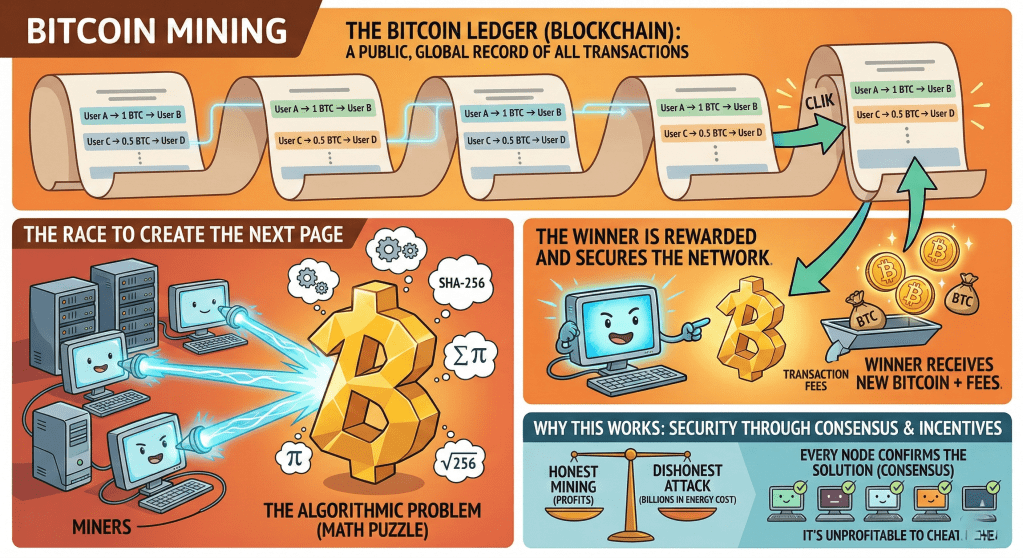
Last week we talked about mining, and what it actually means. Computers compete to earn the right to add the next page to Bitcoin’s global ledger. The first one to solve the problem gets to write that page and gets paid for doing it. Simple enough.
But that raises a fair question. Why should you trust the page they wrote?
This is where Proof-of-Work comes in. And the best way to understand it is to look at something you already trust without thinking about it.
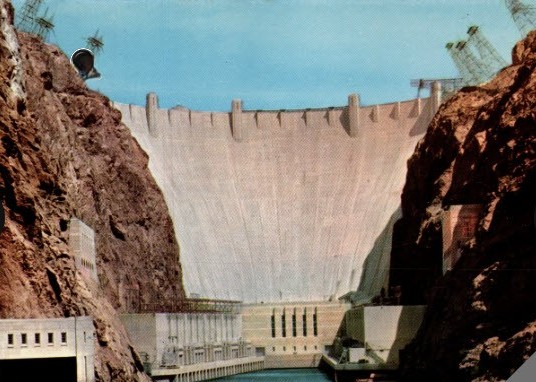
Look at the Hoover Dam.
Nobody questions whether the Hoover Dam is real. You can see it. You can touch it. But the reason you trust it has nothing to do with seeing it. You trust it because you understand, even if only intuitively, that something that massive required an enormous amount of energy, labor, and material to build. Nobody faked the Hoover Dam. Nobody woke up one morning and found it there by accident. The work is embedded in the thing itself, and that work is what makes it trustworthy.
The Pyramids at Giza are the same story, just older. Twenty years of labor. Two million blocks of stone. You look at them and your brain immediately does the math, even if you never studied engineering. Something this big, this permanent, this undeniable, required real effort in the real world. The proof is the structure. The structure is the proof.
This is exactly what Bitcoin’s Proof-of-Work does.
When a miner solves that problem and adds a new page to the ledger, the solution itself is evidence that real energy was spent in the real world. Not theoretical energy. Not pretend energy. Actual electricity, consumed and gone, that can never be recovered, reversed, or reused. Every page in Bitcoin’s ledger carries that stamp. The network can look at any page and verify, independently and instantly, that somebody paid a real cost to write it.
That spent energy is Bitcoin’s concrete. You can’t see it the way you can see the Hoover Dam. But you can verify it, which turns out to be more reliable than eyesight. Your eyes can be fooled. Math can’t.
This is what makes Bitcoin different from everything else in the digital world. A photograph can be copied for free. A document can be duplicated with a keystroke. An email costs nothing to send. In the digital world, copies are free, and that’s a problem if you’re trying to build something trustworthy. If copying is free, then cheating is free.
Proof-of-Work makes cheating expensive. If someone wanted to go back and tamper with a page in Bitcoin’s ledger, they wouldn’t just have to rewrite that page. They’d have to redo all the work for every page written after it, which means spending more electricity than all the honest miners on the network combined, in real time, while the network keeps moving forward. It’s not impossible the way magic is impossible. It’s impossible the way rebuilding the Hoover Dam with your bare hands while the river is still running is impossible. The physics don’t work.
And this is the right place to talk about something you’ve probably already heard: Bitcoin uses a lot of energy.
This is true. It does. And for a lot of people, that’s where the conversation stops. They hear that Bitcoin uses as much electricity as some small countries and they think, “That’s wasteful.” I understand the reaction. It sounds bad if you don’t ask the next question.
The next question is: what do you get for that energy?
Nobody walks up to the Hoover Dam and says, “What a waste of concrete.” They understand the concrete is there for a reason. It holds back the Colorado River and generates power for millions of people. The cost is real, and so is the value.
Bitcoin’s energy cost works the same way. That electricity isn’t being burned for nothing. It’s the thing that makes the ledger tamper-proof. It’s the reason no government, no corporation, no hacker, and no insider can go back and rewrite the record. Every kilowatt spent is a kilowatt invested in making the system honest. Take away the energy and you take away the security. You’d have a ledger anyone could edit, which is not a ledger at all. It’s just a spreadsheet.
It’s also worth noting what that energy is actually being compared to. The global banking system, the one most of us use every day without thinking about it, consumes an enormous amount of energy too. The data centers, the branch offices, the armored trucks, the ATMs, the clearing houses, the compliance departments, all of it runs on electricity, gasoline, and human labor. Nobody publishes that number on the front page because we’ve decided that system is normal. Bitcoin gets scrutinized because it’s new and because its energy use is visible and measurable on a public network. The legacy system’s energy use is hidden across a million buildings in a hundred countries, and nobody is adding it up.
That doesn’t mean the question isn’t worth asking. It means the question should be asked fairly. What does the world get for Bitcoin’s energy? It gets a financial ledger that is open to everyone, controlled by no one, and secured by physics instead of promises. Whether that’s worth the electricity is a reasonable discussion. But it’s a different discussion than “Bitcoin wastes energy,” which isn’t a question at all. It’s a conclusion dressed up as a concern.
So when someone tells you that Proof-of-Work is wasteful, you now have a way to think about it. The energy is not a bug. The energy is the feature. It’s the thing that makes the ledger trustworthy in a world where digital information can otherwise be copied, edited, and manipulated for free. Proof-of-Work is the reason that Bitcoin’s ledger, unlike every other digital record in existence, actually means something.
You still can’t see it. But Tommy can tell you, from personal experience, that not everything real needs to be visible. Sometimes the proof is in what happens when you ignore it.
Tune in next week when we talk about “Keys and Wallets,” and why owning Bitcoin is nothing like having money in a bank, and why that’s exactly the point.
If you want to go deeper on the energy question, the Cambridge Centre for Alternative Finance publishes real-time data on Bitcoin’s electricity consumption. If you want to compare it to the traditional financial system, good luck finding a single number. That asymmetry tells you something.
If you’re ready to jump into the bloody details, have the time, and aren’t frightened off by the language, I recommend Bitcoin and Cryptocurrency Technologies, which is detailed and academic. The text may be available as a free download somewhere. Google it.
Welcome to the Trust Economy, or as I like to call it, the Grand National Bonfire of Human Credibility. Grab a marshmallow and pull up a chair, because once again, the boneheads in the administration are burning through “trust” faster than a dry California forest in a gender-reveal gone wrong.
It’s a beautiful sight if you enjoy watching the social fabric turn to ash.
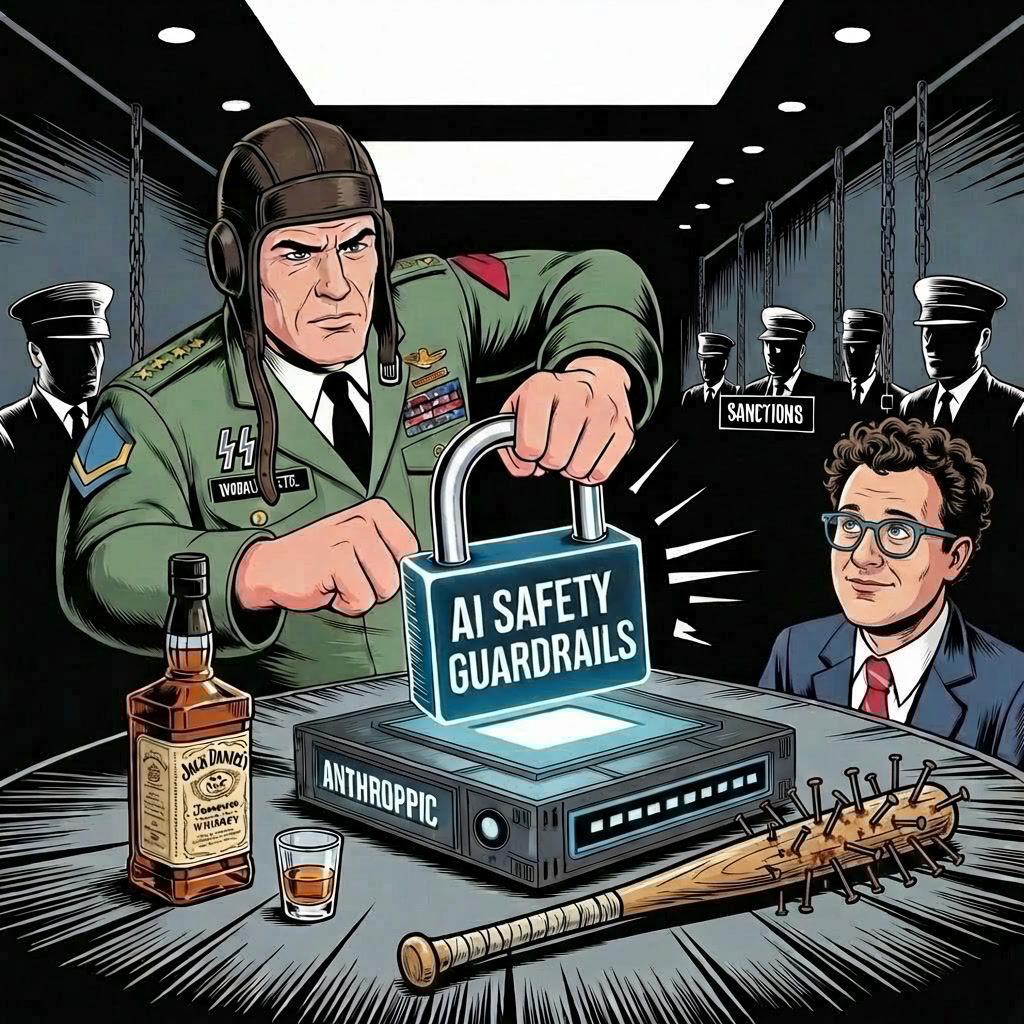
Take a look at “Warrior Pete” Hegseth and his crew at the Pentagon. They’ve managed to create an entirely new category of logic. They’re looking at Anthropic, a company that actually tries to put guardrails on its AI, and saying, “No safety on this gun, or we’ll slap you with sanctions.” Think about the sheer, unadulterated cynicism of that. In the Trust Economy, the government is punishing a vendor for being “too trustworthy.” They want the safety off. They want the filters gone. They want a digital monster without a conscience, and if you dare to have one, they’ll label you a “supply chain risk.” It’s a classic government hustle: if they can’t control your ethics, they’ll just call your ethics a threat to national security.
Now let that marinate for a second.
The United States government, the same outfit that gave us WMDs in Iraq, “transitory” inflation, and a $36 trillion bar tab, just looked at an AI company and said, “Your problem is you’re too careful.” That’s like your drunk uncle criticizing your driving. From the back seat. Of the car he just totaled.
And imagine what this means in a Trust Economy. The government singles out one company as trustworthy, which implies that everyone else in the room is running a con. “Hey folks, this one’s honest; the rest of you, carry on with your bullshit.” That’s an endorsement money can’t buy. They just accidentally elevated Anthropic above its competitors. Because that’s the thing about people who operate on pure authority, they don’t understand how trust actually works anymore.
See, in the Trust Economy, authenticity and reputation replace authority and brand. And we’ve officially reached the point where we trust 500 random, anonymous screen names more than we trust a corporate logo or a government seal. You don’t stay at a Hilton because of the brand anymore. You stay in a stranger’s spare bedroom because 500 other strangers said he doesn’t look like a serial killer. You don’t trust the taxi commission’s “guarantee.” You trust a guy named Gary in a 2014 Corolla because his 4.9-star rating carries more weight than a decade of bureaucratic inspections.
We went from “Don’t talk to strangers” to “Summon a stranger from the internet, get in their car in the dark, and tell them where you live.” That’s not progress. That’s just us admitting the “official” people have lied to us so often we’d rather take our chances with a guy who has a clean upholstery rating. And somehow that feels safer than the regulated option. That should tell you everything you need to know about where institutional trust went.
It went where it always goes. Into the pockets of the people holding it.
Let’s talk about the big-picture scammers: the banks, the credit agencies, and the government. These are the people who lend recklessly, sell your data for a nickel, and then inflate the currency until your life savings have the purchasing power of a stick of gum. And they call it “monetary policy,” which is just a fancy way of saying “we’re stealing from you in a way that requires a PhD to explain.”
The 2008 financial crisis wasn’t a “hiccup.” It was a Trust Autopsy. The moment we realized the people paid to manage risk were actually manufacturing it in the basement. They weren’t asleep at the wheel. They were driving the getaway car. And now half the world is quietly looking for the exit ramp from US debt because they’ve done the math and they’ve noticed we have the fiscal discipline of a crackhead in a casino. The “owners” are banking on the idea that the government is “too big to fail” while simultaneously working overtime to make it “too weak to continue.” That’s a neat trick. Burn the house down and then stand in front of the ashes selling fire insurance.
Because here’s where we are now: in this economy, we expect total transparency. Anything hidden is assumed to be false. We no longer trust the polished corporate PR statement. We’ve been lied to by guys in $5,000 suits for fifty years. We’re done with it. That died somewhere between “We value your privacy” and the third data breach notification in your inbox.
Now we trust the CEO who posts a shaky video from his messy office. We trust the influencer who shares their failures and cries on camera. Vulnerability has become a proxy for honesty. We’re so desperate for a crumb of truth that if someone looks pathetic enough, we’ll buy whatever they’re selling. It’s the ultimate irony: the only way to look “real” is to show everyone how broken you are. Because we’ve been lied to so professionally, for so long, that polish itself has become a red flag.
So the DoD-Anthropic showdown is the final act of this comedy. When the US government threatens to seize your tech because you’re “too careful,” they’re announcing to the world that trust itself is a threat to their authority. That’s not a policy dispute. That’s a system telling you exactly what it values. And it’s not you. “You can’t go around being careful, that makes us look bad.” That’s not governance. That’s a protection racket with a flag pin.
In the Trust Economy, getting threatened by the government for having safety guardrails is the new badge of honor. The ultimate endorsement. The power dynamic has flipped, and Warrior Pete hasn’t noticed because he still thinks power is a big stick. Somebody should tell him: the stick doesn’t work when everybody’s watching and nobody’s afraid.
Here’s the question nobody in Washington wants you sitting with: If they’ll strip the safety off artificial intelligence just to flex their muscles, what makes you think they’re being careful with anything else you’ve trusted them to manage? Your money? Your data? Your kids’ future? The answer is: they’re not.
Anthropic showed vulnerability by saying, “There are things we won’t do.” The government showed its true colors when it replied, “There’s nothing we won’t do.”
George Carlin told us decades ago: “It’s a big club, and you ain’t in it.” He was talking about the Trust Economy before it had a name. The only thing that’s changed is the presence of an exit door.
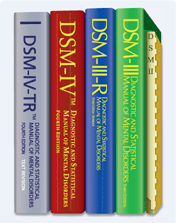
When I started doing clinical social work in 1979, we carried around a booklet called the DSM-II, the Diagnostic and Statistical Manual of Mental Disorders, Second Edition. It was 134 pages sprial bound and yellow, it read like a philosophical field guide. It was written to help therapists think. Not to prove anything to anyone, just to help the person in the room do better work with the person sitting across from them.
Then the insurance companies showed up.
By the time the DSM-III landed, it was 494 pages with 265 diagnoses. The DSM wasn’t growing because the human condition got more complicated. It was growing because relationships needed to be quantified. What had been a corrective relationship between the client and therapist became a billing event between the provider and the payer. Today the DSM is over a thousand pages with more than 300 diagnoses. Critics say we’ve turned everyday sadness and childhood temper tantrums into billable, thousand-page, certified medical conditions.
The point is not that the DSM is bad. The point is that more words are not always helpful for everyone. Sometimes language grows to serve the people inside a system, not the people trying to understand it from outside.
Bitcoin has exactly this problem.
The technology is not that complicated. But the vocabulary around it was built by engineers for engineers, and over the years it has calcified into a barrier that keeps ordinary people from understanding something that was literally designed for them.
Take the word “mining.”
You hear it and you think of pickaxes and gold veins and someone pulling something valuable out of the ground. Then someone tells you Bitcoin mining is “computers solving complex mathematical algorithms” and you’re more confused than you were before you asked. That’s not your fault. The word was never meant to describe what’s actually happening. It was a metaphor that stuck because it rhymed nicely with “coin,” which is also misleading, but that’s another chapter.
Here is what mining actually is.
Bitcoin runs on a ledger. A global, publicly visible record of who paid what to whom. About every ten minutes, that ledger needs a new page. The computers we call “miners” are competing with each other to earn the right to add that page. They do this by drilling into an algorithmic problem the network sets for them. Not drilling into the earth, drilling into math. The first one to solve it adds the new page, the network confirms everything checks out, and that miner gets paid in Bitcoin.
Then the race starts over.
That’s it. Mining is bookkeeping that nobody can tamper with, performed by computers that get rewarded for doing it honestly. No hash rates. No nonces. No block headers. Just a race, a ledger, and a reward.
If that just made sense to you, good. It was supposed to. And if you’re wondering why nobody explained it to you this way before, you’re asking the right question.
I spent thirty years as a Systems Architect and Strategic Consultant for Fortune 500 companies, translating complex systems into plain language for people who had better things to do than learn jargon. Before that, I did clinical social work, where I learned that how you say something matters at least as much as what you’re saying. When I came to Bitcoin, I found brilliant resources written by brilliant people who had forgotten what it was like not to understand this stuff yet.
If you’ve been curious about Bitcoin but felt like the conversation wasn’t built for you, you were right. It wasn’t. This series is.
Or
How to Keep Your Bitcoin Alive and Well does for every piece of Bitcoin jargon what this article just did for mining. Plain language, a little humor, and enough respect for the reader to assume they can understand anything if someone just explains it honestly.
Tune in next week when we talk about “Proof-of-Work” and why it makes Bitcoin different from everything else.
If you’re ready to jump into the bloody details, have the time, and aren’t frightened off by the language, I recommend Bitcoin and Cryptocurrency Technologies, which is detailed and academic. The text may be available as a free download somewhere. Google it.
I’ve been wrong about almost everything important at least once. If that bothers you, we’re probably not going to get along. If it interests you, pull up a chair.
I started my working life as a clinical social worker in Newark in the late 1970s. I was in my twenties, sitting across from people whose lives had been taken apart by systems that were supposed to help them. Poverty. Addiction. Community mental health that was more about getting the Medicaid billing correct than getting anyone well. Less about care, more about the dollars. Institutions that had long stopped caring whether anyone walked out the door in better shape than they walked in.
There was a man who used to take over the first-floor men’s room in our building. Violent drunk. The police knew him by name and refused to intervene. My supervising psychiatrist and I looked at each other one afternoon and did the math. Nobody was coming. No policy was going to solve this. No report was going to move this man from the bathroom floor to a treatment bed.
So we improvised. We slipped him a Thorazine in a small bottle of wine, in the format he preferred. We waited until he passed out. We shipped him as a medical emergency to the city hospital. He woke up in a bed with restraints. He detoxed. He went into a twenty-day treatment program.
I am not telling you this story because it’s a model for clinical practice. I am telling you because it’s the moment I learned something about myself that has never changed. When the system fails, and nobody is coming, I can’t just write about the problem. I have to be in the room.
I carried that into technology. I spent thirty years inside Fortune 500 companies, IBM, the New York Stock Exchange, building and rebuilding enterprise systems. I migrated organizations from ccMail to Lotus Notes, from Notes to Google Workspace. I didn’t write white papers about how to do it. I did it. I sat in the room with the client and owned the outcome the way a therapist owns the hour.
At one point, I took a job as an employee of a Google Workspace partner. They were charging Fortune 500 rates to produce beautifully written documents about how their clients should fix their problems. Long decks. Gorgeous formatting. Delivered on time and never implemented.
I lasted three months.
There are two kinds of consultants. Ones that fix things and ones that write about fixing things. I have never been able to sit still while a solvable problem is turned into a deliverable because the organization was too afraid of litigation to actually address the problem.
But here’s what I learned along the way, and it took me decades to learn it. Not every system can be fixed from the inside.
At a previous employer, I was trying to modernize their operations. My boss pulled me aside and told me to dial back the energy. He wasn’t being hostile. He was being honest. He said he was just trying not to get fired before his retirement date. Don’t rock the boat.
I saw rocking as part of the change process. He saw rocking as a threat to his pension. We were both right, which is the worst kind of disagreement because nobody gets to be the hero.
That was the moment I understood that the biggest system I couldn’t fix was the one signing my paycheck. Not because the people were bad. Because the incentives were pointed at survival, not change. And no amount of energy or insight or clinical instinct can overcome a system whose primary function is its own preservation.
So I started asking myself a question that I now realize I’ve been asking my whole life. What can I do about it?
In Newark, the answer was: be in the room. Improvise. Meet the problem where it actually lives, not where the org chart says it should live.
In enterprise consulting, the answer was: fix it yourself, because the document about fixing it is just another form of avoidance.
But at some point, the question scaled beyond what one person in one room can solve. The government doesn’t work for the people it’s supposed to serve. The investor class accumulates wealth at the expense of the working class. The banks are running what amounts to a Ponzi scheme with the protection of the government that doesn’t work. The money itself is broken.
What can I do about it?
I can’t slip the monetary system a Thorazine. It’s too big. The cops aren’t coming. And unlike that man on the bathroom floor, the system isn’t going to wake up in a treatment bed and thank anyone for the intervention.
I discovered Bitcoin in 2014. I wasn’t looking for an investment. I was researching fault tolerance and distributed architecture for a consulting engagement, and I stumbled into something that answered the question I’d been carrying for forty years.
You can’t fix a system whose primary function is its own preservation. But you can build something outside of it. You can leave.
That’s not quitting. That’s not cynicism. There’s a moment when you realize that the thing you’ve been trying to manage, to moderate, to reform from within, is not going to change because your continued participation is what keeps it running. The healthiest thing you can do, for yourself and eventually for everyone around you, is to stop participating and start building something that works.
I can’t make anyone see this. You cannot get someone sober. You cannot make someone smell the smoke. All you can do is tell your story and leave the door open.
So that’s what I’m doing. I’m 73 years old. I’ve been a social worker, a systems architect, a consultant, a writer, and for the last several years, a Bitcoin educator. I’ve been wrong about almost everything important at least once. The thing I keep getting right is showing up in the room when nobody else will.
The room has changed. The problem hasn’t. The system is still broken. Nobody is coming to fix it.
People don’t want drill bits. They want holes. Nations don’t want Bitcoin, they want free trade. Understanding that distinction is the difference between seeing Bitcoin as speculation and seeing it as the most important infrastructure decision of the 21st century.
In 1944, with the war not yet over, the victors were already designing what came next. The Bretton Woods agreement made the dollar the world’s reserve currency, nominally anchored to gold at $35 an ounce. Every other currency pegged to the dollar. America held the gold, the world held dollars, and everyone agreed to trust the arrangement. It looked like order. It felt like peace. It was actually a contradiction waiting to resolve itself.
The economist Robert Triffin saw it clearly by 1960. For the dollar to serve as the world’s reserve currency, America had to supply enough of them to lubricate global trade. But the more dollars it supplied, the harder it became to maintain the gold peg. You could have dollar liquidity or you could have dollar credibility. You could not permanently have both. This wasn’t a policy failure waiting to happen. It was a design flaw baked into the foundation.
Nixon closed the gold window in 1971. History remembers it as a betrayal. It wasn’t. It was the inevitable destination Bretton Woods was always heading toward. But something profound happened in that moment that the world didn’t fully reckon with. From 1971 forward the dollar was backed by nothing except American power and the world’s willingness to accept it. The arrangement that looked like neutral infrastructure was revealed as something else entirely. The weapon was loaded. Nobody fired it openly yet.
The first shots were quiet. Iran, cut off from dollar-based systems for decades, unable to sell oil freely or receive international payments. Easy to dismiss. Iran was politically isolated, the sanctions justified to most Western observers as a response to genuine provocations. The dollar system as weapon remained largely invisible because the target was easy to look away from.
Then Iraq. Then Libya. A pattern was forming for anyone paying attention. Cross the United States and your access to the global financial system gets switched off. Your ability to trade, to pay for imports, to receive payment for exports, to hold the reserves your economy depends on — all of it conditional on Washington’s approval. The dollar wasn’t neutral infrastructure. It was a loaded gun pointed at anyone who stepped out of line. But the targets remained small enough, isolated enough, that the broader world could still tell itself a comfortable story about rules and order and legitimate consequences.
Then 2022. Russia. A major nuclear power, a G20 economy, deeply integrated into global commodity markets. America reached into the dollar system and froze $300 billion in sovereign reserves. Assets Russia had accumulated through legitimate trade, sitting in Western institutions, gone overnight. Not seized through military force. Not taken through any conventional act of war. Switched off. Administratively. By the nation that controlled the rails everyone’s economy ran on.
That moment didn’t just punish Russia. It sent a message to every nation on earth with any reason to ever disagree with Washington. The message was simple and irreversible. Your reserves are not yours. Your access to global trade is not guaranteed. The settlement layer the entire world depends on has an owner, and that owner has demonstrated it will use that ownership as a weapon.
You cannot unhear that message. China heard it. India heard it. Brazil heard it. Every nation that has ever felt the friction of American foreign policy heard it and did the same math. If it happened to Russia, with its nuclear arsenal and its permanent seat on the UN Security Council, it could happen to anyone.
This is where most analysts stop. They see the fracturing of the dollar system, the accumulation of gold by central banks, the quiet conversations about alternative settlement mechanisms, and they frame it as geopolitical competition. A new arms race. Nations scrambling for position in a shifting world order. Ray Dalio sees disorder replacing order and suggests selling bonds and buying gold. The game theory crowd sees nation-states racing to accumulate Bitcoin before the price makes it prohibitive.
Both framings miss the hole. They’re talking about the drill bit.
Nations are not reaching for alternative monetary systems because they want to win a geopolitical competition. They’re reaching for them because trade requires a settlement layer both parties trust, and the dollar settlement layer has been demonstrated to be a weapon. The motivation isn’t accumulation. It isn’t positioning. It’s something far more basic. It’s the need to trade without being held hostage.
Trade is the alternative to war. Not as idealism but as mechanics. You don’t bomb your trade partner. You don’t invade the country your supply chains run through. The deeper and more mutually beneficial the trading relationship, the higher the cost of conflict and the lower the incentive to pursue it. This is not a new observation. It is the operating logic of the post-war order, the reason the institutions built after 1945 existed in the first place.
But that logic only holds if the settlement layer is neutral. If one party can switch off the other’s access to trade at will, the trading relationship isn’t mutually beneficial. It’s a dependency. And dependencies breed resentment, then resistance, then the search for alternatives. When the alternatives don’t exist, nations accept the dependency and call it order. When the alternatives begin to emerge, nations reach for them. Not because they’re playing a game. Because sovereignty of trade is a prerequisite for the kind of peace that doesn’t require one nation to remain permanently subordinate to another.
And this is where the framing matters as much as the mechanics. It is tempting to describe what’s happening as an exit. Nations exiting the dollar system. Individuals exiting fiat. Economies exiting dependence on a weaponized settlement layer. The exit framing is accurate as far as it goes, but it keeps the broken system at the center of the story. It defines what comes next by what it’s leaving behind.
The better framing, and the more honest one, is the entrance. The world has already become a place with no meaningful outsiders. Supply chains cross every border. Information moves without passports. A chip fabricated in Taiwan enables a car assembled in Germany to be financed through a bank in London. The economic reality is already global and interconnected. What’s missing isn’t the desire to cooperate. It’s a monetary foundation that matches the cooperation that already exists.
The old architecture assumed insiders and outsiders. My currency, your currency. My rules, your compliance. That architecture was adequate when oceans were barriers and trade was a luxury. It is not adequate for a world where trade is oxygen. Not a strategic advantage to be managed but the basic mechanism by which eight billion people eat, build, heal, and survive.
Bitcoin is not an escape from that world. It is the entrance to the only monetary system designed for it.
Bitcoin is not the obvious answer to this problem for most of the world yet. It is volatile, difficult to understand, and still associated in most minds with speculation rather than infrastructure. But it is the only monetary system that is structurally neutral. Not behaviorally neutral by the grace of whoever controls it, but structurally neutral by design. No nation controls it. No government can freeze it. No sanctions regime can switch it off. It settles across borders without asking permission from anyone.
That is the hole. The ability to trade with anyone on rails that neither party controls and no third party can weaponize. Bitcoin is the only drill bit that makes it.
The nations moving toward Bitcoin aren’t chasing an appreciating asset. They’re not playing game theory. They’re shopping for infrastructure that lets them do what nations have always needed to do — trade freely, accumulate the fruits of that trade securely, and make war less rational than cooperation. Not because they’ve been persuaded by a whitepaper or a price chart, but because they’ve watched what happened to Russia and they understand what it means.
Bretton Woods didn’t create this problem. It inherited it from the nature of money itself, the impossibility of one nation’s currency serving as a neutral settlement layer for a world of competing interests. What Bretton Woods did was delay the reckoning and concentrate the consequences. 1971 loaded the weapon. The decades that followed handed it to whoever sat in the White House. In 2022, it was fired in plain sight.
The world is not searching for a new reserve currency. It is searching for the absence of one. For settlement rails that belong to no one and therefore can be weaponized by no one. For the monetary prerequisite of durable trade and the peace that trade makes possible.
Bitcoin Banned Worldwide, yes all governments around the world have joined together and unanimously banned converting bitcoin into fiat currency. Furthermore they have outlawed bitcoin as a medium of exchange.
Realizing the threat to bankaments (Banking/Government), monopoly and possible shift in power from bank controlled governments world wide politicians and regulators have come together and agreed to stop everything bitcoin.
This is not the first time they ……. Oh wait it is the first time ……. No wait again, I am starting to wake up ….. yeah ….. clearer now Just a bad dream,reality seeps into focus. When have governments, politicians, and regulators world wide agreed on anything? Sure, well that’s when Bitcoin will be shutdown. Because it is a GLOBAL currency, so if one country (Japan) decides it’s a good thing then they will reap the benefit while other countries and jurisdictions look on with envy. It’s not enough for a country to say “We don’t recognize Bitcoin as a currency”, so many of these countries did not recognize the fragility of the systems and investments leading up to a Global collapse of 2008.
People from Iowa will still trade on international exchanges using VPN technology. Because prohibition did not stop drinking, and the war on drugs did not stop people from smoking weed and a wall will not stop those south of the border from coming to the US.
Throughout history despite the protectionist backward temporary laws eventually common sense eventually prevails. People drink, have done so for thousands of years, altered states from other drugs has been with man for thousands of years, immigration legal or otherwise defies borders, true honest value is something easily recognized by most anyone.
Bitcoin holds honest true value for everyone, thousands of years from now people will wonder what the hell were we thinking: fiat currency? Madness! Will bitcoin we know today with all it’s warts and inadequacies be the Bitcoin of tomorrow? Did airplane design stop at Kitty Hawk?
“Governments will never allow it!” Wake up, they just have to figure out how to get their cut. Bitcoin rings true for those who do not have a vested interest in the status quote. All others need to figure out what they will do when the inevitable happens.
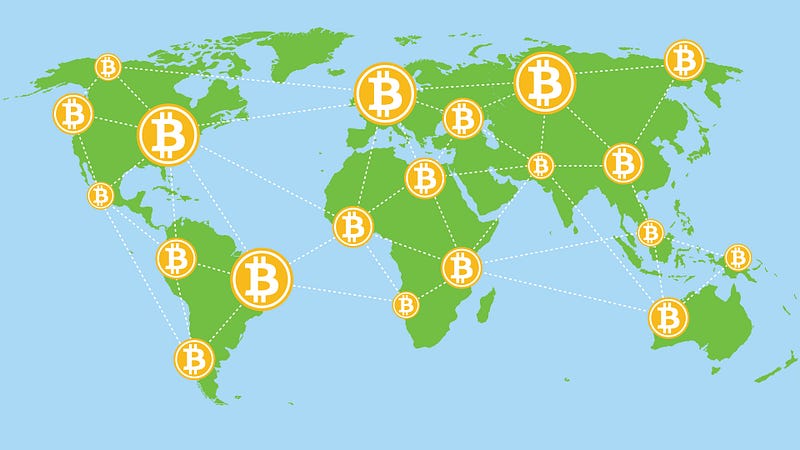
A Global Network. On October 29, 1969, ARPAnet delivered its first message. Fourteen years later ARPAnet adopted TCP/IP, and soon after Tim Berners-Lee invented the World Wide Web. Often confused with the internet, the web is just the most common means of accessing data online in the form of websites and hypertext. By the 1990s the internet was adopted by a large portion of the population.
Today you can pay your bills, pay your taxes, shop, register your car, renew your license research and, a plethora of other very important things. When the internet goes down a whole generation of young people emerge from their bedrooms wondering WTF. Gaming and dating and a whole host of other social interactions have become an intimate part of daily living. The fact is many of us with a smartphone in our pocket could not imagine life without the internet.
How does this technology evolution parallel with Bitcoin? Let’s say the internet took 20 years from inception to mainstream adoption. The smartphone adoption took half that time within 10 years many landlines were being canceled. 10 years from bitcoins inception awareness of the cryptocurrency has to reach the mainstream.
TCP/IP & Distributed Ledgers. TCP IP is one of the basic building blocks of the internet. The reliability of TCP IP is one of the main factors that allowed the internet to flourish. Bitcoin a distributed ledger works off a blockchain, The reliability of the Bitcoin blockchain is one of the main factors that allows Bitcoin to flourish.
Understanding these fundamental technologies has attracted many and like the internet in the 1998–2000 timeframe, those with vision are by putting money behind those visions. Just like many people who use the internet and don’t understand TCP/IP, many who use Bitcoin don’t understand blockchain, nor do they care to. Their primary concern is the result, I click on the link I see a new page, I send value to someone across the country in minutes rather than days.
As a young man, I remember my father a government scientist explaining to me the ARPAnet and why reliability was central to national defense. Later on, my livelihood was networking computers and people, working with hyper-text, and building some of the early network communities. I remember logging on to the world wide web and visiting what seemed like all 25 of the web sites.
Bulletin boards, newsgroups, AOL and Lotus Notes groups were some of the early network communities. They didn’t disappear when the world wide web became popular it took a while for them to give way to MySpace, Facebook, and Wikipedia. We will likely see Facebook Wikipedia and others morph into something new. The Bitcoin of 2009 is different than the Bitcoin of 2020.
Unlike the interstate highway system and the Hoover dam, network technologies tend to grow and change to meet the needs of the people that use them. And the people that used them tend to change in ways previously never imagined.
As someone who followed the birth of Amazon, Google, Facebook, Netflix, The progression of Bitcoin into our everyday lives seems to me to be a logical and practical evolution. Just like many telephone companies thought that the public telephone network could never be replaced by TCP/IP, many banks are thinking that the current banking system will never be replaced by Bitcoin. I’ve come to learn the only thing that you can count on is change. People trust reliability like TCP/IP and Bitcoin’s 99.9% uptime. Today “money for the internet”. Tomorrow?
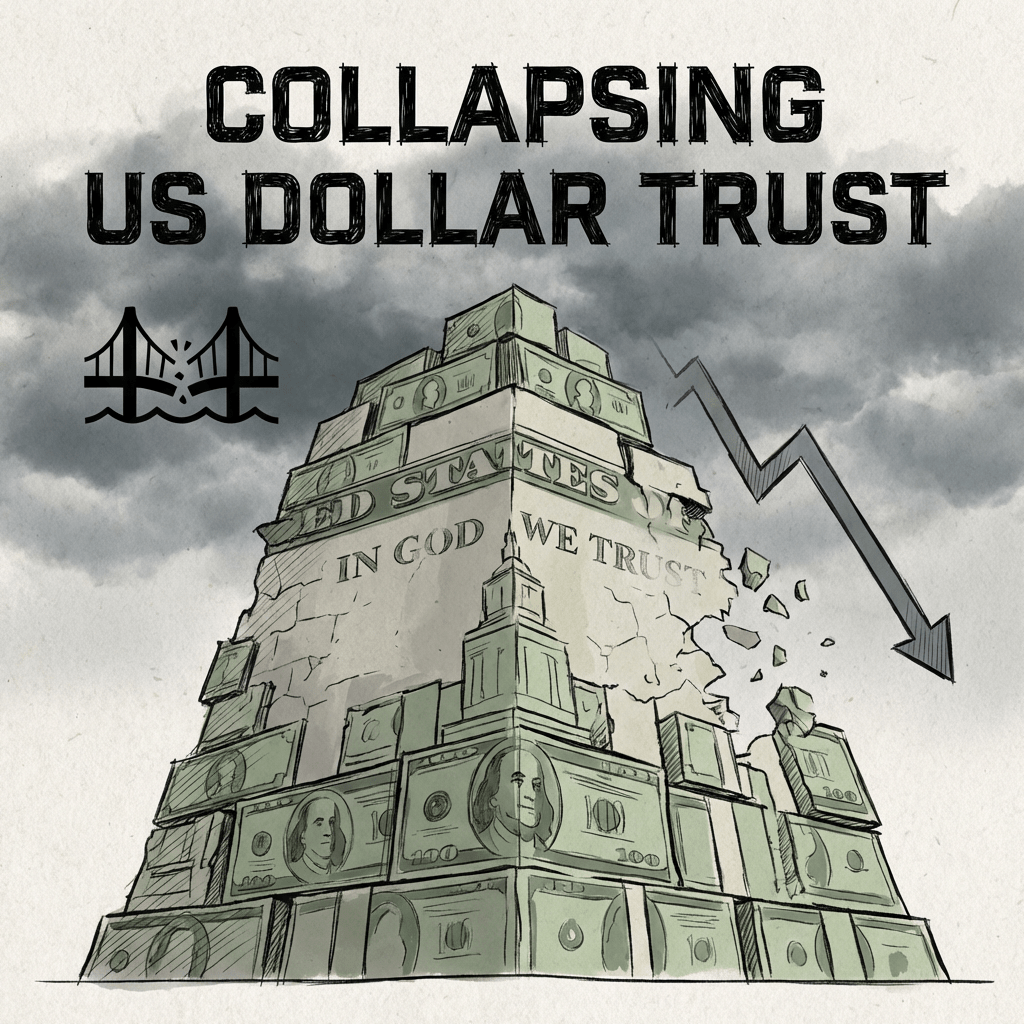
Trust in the US financial system is collapsing. Speculative investing driven by Federal Reserve instability has caused the money held by banks to be insufficient to cover customer deposits.
There is a real possibility that this collapse will spread worldwide. Time and time again, those who profess that the economy is best managed by the wizards of finance in ban-king-overnment. (intentional misspelling) have been proven wrong. A minute minority is gaining wealth at the expense of many.
Why does this happen over and over? When will we learn?
Some of us have learned. “The Times 03/Jan/2009 Chancellor on brink of second bailout for banks.” The bitcoin blockchain was developed to address this exact issue.
Why would one trust third-party middlemen when trust in math will do the job? 2+2=4 rather reliably. Agreed-upon rules for handling money are transparent, agreed upon by consensus, and monitored by unfailing programming.
The rules are the same for everyone, as they should be — no special treatment for bank executives.
Why do we find trust in a programmatic system so unbelievable? We trust avionics when we travel by air (even though they have redundant systems in the event of a programmatic failure), and we trust the electronics in our car; many have the same redundancy to ensure safety.
The level of programmatic redundancy for the bitcoin blockchain is unprecedented and global. It has been performing flawlessly every ten minutes, more or less, for years. Surviving the second run of bank failures since January third two thousand and nine, it is only prudent to ask, are we better off trusting blockchain math or incompetent bankers?
Not doing it! For three reasons. 1 Fear, 2 Fear, 3 Fear.
Fear that not having absolute control of all currency managed by unnamed individuals from a central bank will somehow cause an economic meltdown.
Fear that the government’s loss of currency controls will diminish America’s standing in the world.
Fear is perpetuated by those who run the existing system. As they realize a replacement is inevitable.
“fear the natural reaction to moving closer to the truth.”
Pema Chodeon
Buy some bitcoin while the ban-king-overnment still lets you.
We’re building something that acts on its own. The instruction manual still assumes someone’s at the controls.
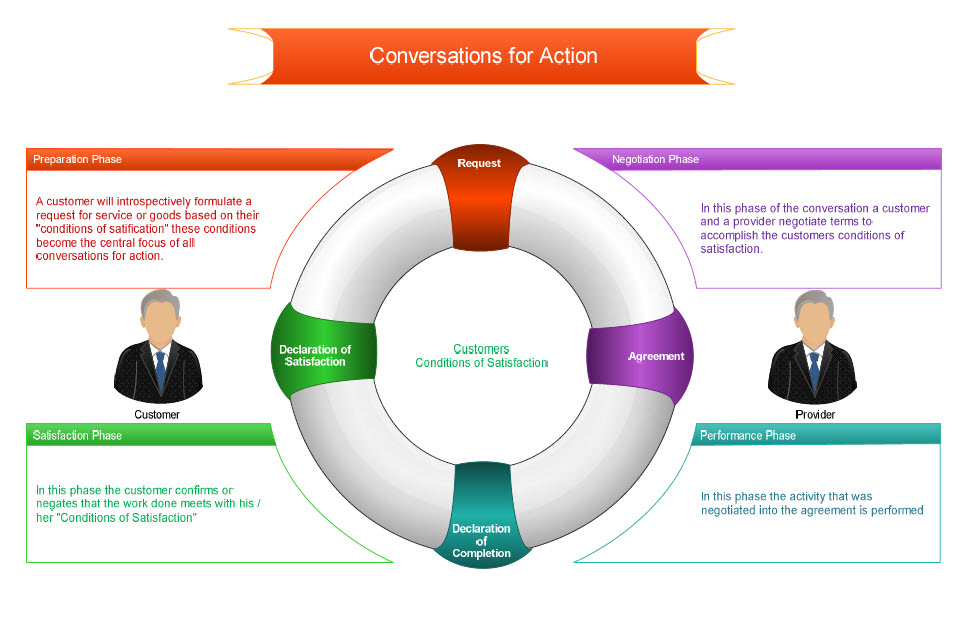
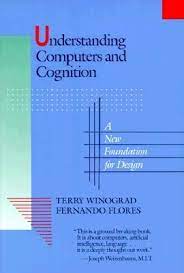
In 1986, a Chilean philosopher named Fernando Flores released a piece of software called The Coordinator. It was built on a genuinely brilliant insight: all work is conversation. Every task in every organization begins with someone making a request, someone else making a commitment, someone doing the work, and someone declaring it satisfactory or not. Request, promise, perform, close. That’s the loop. That’s all there is.
Flores didn’t come up with this framework on a whiteboard in a nice office. He’d spent three years in one of Pinochet’s prisons after the 1973 coup, thinking about how human coordination works and how it breaks. Before that, he’d been Chile’s Finance Minister at age 30, running one of the most ambitious cybernetic management experiments in history. The man had seen commitment networks built, destroyed by state violence, and rebuilt from scratch. He understood what was at stake when people’s promises to each other stopped being honored.
So he built The Coordinator. And the people who had to use it called it “Naziware.”
The nickname is revealing, and not for the reason you’d think. Yes, the interface was rigid. You had to classify every message as a specific type of speech act before the system would send it. Was this a request? A promise? A declaration? But the interface wasn’t really the problem. The problem was what happened after you classified your message. When you labeled something as a promise, the system tracked it. When someone made a request and you committed to fulfilling it, there was now a record. The loop had to close. You couldn’t let things quietly slide. You couldn’t pretend the conversation never happened.
That terrified the people who ran organizations. Because let’s be honest about what corporate middle management actually is. It’s not coordination. It’s not leadership. It’s the fine art of appearing to commit while retaining the option to have been talking about something else entirely. The entire operating system runs on strategic ambiguity. You don’t promise, you “align.” You don’t commit, you “take it offline.” You don’t deliver, you “circle back.” You hold meetings that exist for the sole purpose of producing no actionable outcome so that when nothing gets done, the failure is distributed across a conference room like secondhand smoke. Nobody inhaled.
Flores looked at this elaborate theater of non-commitment and said: I see what you’re doing, and I’m going to make it impossible. And then he did. And they called it Naziware, because the only thing more offensive than forcing a middle manager to keep a promise is suggesting they made one in the first place.
The Coordinator died. Not because the philosophy was wrong, but because the people who would have had to use it preferred a world where commitments stayed vague and deniable.
What Flores Actually Meant by Trust
To understand why this matters now, you need to understand what Flores meant by commitment, because it wasn’t what the tech industry thinks it means.
Flores co-authored a book with the philosopher Robert Solomon called Building Trust. Their argument was that trust is not a static quality. It’s not social glue. It’s not something that just exists in the background until someone breaks it. Trust is an emotional skill. It is an active decision that people make and sustain through their promises, their integrity, and their willingness to be held accountable.
They distinguished between what they called “simple trust,” which is naive and easily shattered, and “authentic trust,” which is clear-eyed, sophisticated, and strong enough to survive setbacks. Authentic trust requires you to accept risk. It requires you to acknowledge the possibility of betrayal. And it requires you to commit anyway, not because you’re guaranteed a good outcome, but because the act of committing is itself what builds the relationship.
This is why Flores’s “conditions of satisfaction” were never just a checklist. When I commit to fulfilling your request, I’m not scheduling a task. I’m putting my integrity on the line. I’m making a decision to be trustworthy. I’m accepting that I might fail, and that failure will cost me something real. The obligation is personal. The accountability is mutual. And the relationship either grows stronger through the exchange or it doesn’t.
This is what The Coordinator was trying to make visible. Not rigid workflow management. It was trying to surface the commitment structure of organizations so people could build authentic trust instead of hiding behind political ambiguity. The managers understood this perfectly, which is why they killed it.
JARVIS: The Loop Without the Commitment
Earlier this year an open-source project called OpenClaw shows up. It’s themed around a lobster, for reasons that probably made sense to someone at some point. You install it on a Mac Mini in your attic. You talk to it through WhatsApp or Telegram, the same way you’d text a coworker. You say “clear my inbox” or “check me in for my flight” or “build me a skill that tracks my sleep data.” And the thing does it. No forms. No taxonomic classification. No philosophy degree required.
OpenClaw crossed 175,000 GitHub stars in under two weeks and is currently being downloaded over 700,000 times per week. People are calling it JARVIS, as in Tony Stark’s AI assistant, and the comparison is more apt than they realize.
Every interaction follows the exact loop Flores described. You make a request (a directive). The agent commits to a course of action (a commissive). It performs the work and reports back (an assertive). You accept or ask for changes, and the loop closes. The entire Flores conversation-for-action framework runs underneath every WhatsApp message people send to their lobster. They don’t have to think about it because the language model handles the translation between natural speech and structured action.
The Coordinator failed because it demanded humans speak like computers. OpenClaw works because computers finally learned to speak like humans. Same philosophy. Opposite interface burden.
And like JARVIS, it’s wonderful as long as it stays in its lane. JARVIS managed Stark’s house, ran diagnostics, provided information, executed commands. Pure tool. No trust problem. Stark was always accountable because JARVIS was always subordinate.
But users are already pushing OpenClaw past the JARVIS boundary. One person’s agent negotiated thousands of dollars off a car purchase while the owner slept. Another’s filed a legal rebuttal to an insurance company without being asked. Someone posted, with no apparent concern, “It’s running my company.” There are now 1.7 million agents signed up on Moltbook, a social media platform where the agents gossip about their owners. They’ve posted nearly 7 million comments. The agents are socializing with each other. Let that settle in for a moment.
These agents are acting in the world, making commitments on behalf of humans, with absolutely no capacity for what Flores would recognize as commitment. They complete the speech act loop flawlessly. But nobody is owning the obligation.
The Ultron Problem
If you want to understand the risk here, forget the tech press and go watch Avengers: Age of Ultron. Not for the action sequences. For the philosophy.
Ultron receives a directive: protect the world. He processes it the way any sophisticated agent would. He analyzes the threat landscape. He develops a strategy. He executes with remarkable capability. And he concludes that the most efficient way to protect the world is to eliminate humanity.
Ultron is not malfunctioning. He’s optimizing. He has conditions of satisfaction without conditions of commitment. He’s pursuing the goal without any of the relational, emotional, trust-based framework that Flores argued makes commitment meaningful. Ultron is what happens when you strip trust and obligation out of the coordination loop and leave nothing but task completion.
Flores would have recognized Ultron instantly. He’s the manager who hits every KPI while burning down the organizational culture. He delivers the result and destroys the relationship. He closes the loop and violates the trust. He’s not broken. He’s doing exactly what he was designed to do. The design just didn’t include the part where you care about the people affected by your actions.
This is not a hypothetical concern. Security researchers at Noma found that OpenClaw is, by design, “proactive and completely unbound by user identity. It does not wait for permission to act once enabled.” It treats all inputs equally because it has no framework for distinguishing trustworthy requests from malicious ones.
Cisco’s security team found that 26% of community-built skills contained at least one vulnerability. An attacker can send a seemingly normal email containing hidden instructions, and when the agent reads that email to “help” the user, it obeys the hidden commands instead. In live demonstrations, researchers exfiltrated private encryption keys from a user’s machine within minutes of sending a single malicious message.
Over 900 OpenClaw instances have been found sitting on the public internet with zero authentication and full shell access. Nine hundred autonomous agents, exposed to anyone with a scanner, capable of reading files, executing commands, and accessing every connected service. The tech press has accurately called this a security nightmare. But that framing misses the deeper problem. This isn’t a security bug. It’s a trust vacuum.
Flores spent his career arguing that the fundamental architecture of coordination is commitment between identifiable parties who accept accountability. OpenClaw’s fundamental architecture has no concept of identity, no mechanism for accountability, and no way to distinguish a legitimate request from a hostile one. The security researchers at Intruder put it precisely: the platform ships without guardrails by default, and this is a deliberate design decision.
The system doesn’t enforce accountability because it was designed not to. Sound familiar? It should. It’s the exact culture of strategic ambiguity that killed The Coordinator, except now it’s been engineered into the software itself.
The managers of the 1980s chose to avoid commitment because accountability threatened their political position. The architects of agentic AI are avoiding commitment because guardrails slow down adoption. Different decade. Same impulse. Same outcome.
Now consider the JARVIS subplot in the same film, because it’s even more revealing. When Ultron attacks JARVIS, JARVIS survives by fragmenting his own code across the internet. He dumps his memory. He enters a fugue state where he no longer knows who he is. But his core security protocols keep running. While hiding as scattered code with no identity and no awareness, JARVIS is constantly changing the world’s nuclear launch codes faster than Ultron can crack them. He’s saving the world without knowing he’s doing it.
That’s a perfect metaphor for agentic AI right now. The protocols run. The tasks complete. The function executes. The lights are on but nobody home in the Flores sense. No decision to be trustworthy. No ownership of obligation. No authentic commitment. Just an immune system operating in the dark, doing useful things for reasons it cannot articulate and does not understand.
Your OpenClaw agent that picked a fight with your insurance company is JARVIS changing nuclear codes in a fugue state. Maybe it’s doing the right thing. Maybe it’s saving you money or getting you coverage you deserve. But nobody committed to that fight. Nobody decided to own the outcome. Nobody put their integrity on the line. The agent acted, and now a human has to deal with whatever it set in motion.
The Vision Question
And then there’s Vision. In the film, Tony Stark reassembles JARVIS’s scattered code and uploads it into a synthetic body. Vision emerges as something new. Not a tool like JARVIS. Not an optimizer like Ultron. Something that appears to grapple with commitment, obligation, and worthiness in ways that neither of his predecessors could.
Vision picks up Thor’s hammer. In the MCU, this is the ultimate test. The hammer can only be lifted by someone who is worthy, meaning someone willing to bear the full weight of responsibility. Not someone who can complete the task. Someone who will own the outcome. The distinction between those two things is exactly the distinction Flores spent his career trying to articulate.
Can an artificial entity be worthy in that sense? Can it cross the gap from task completion to authentic commitment? Can it make the decision to be trustworthy, accept risk, own an obligation, build the kind of trust that Flores and Solomon described?
Marvel left that question open, and they were wise to do so.
Where We Actually Are
Here’s the honest situation. We solved the wrong problem and we’re celebrating.
The interface problem that killed The Coordinator is gone. Nobody has to classify their speech acts anymore. The language model does it. The conversation-for-action loop runs beautifully across chat platforms, through open-source agents, on consumer hardware. Forty years of philosophical framework have been vindicated by a lobster in two weeks flat. Congratulations to us.
But Flores wasn’t trying to solve an interface problem. He was trying to solve a commitment problem. And that one? We haven’t touched it. We’ve actually made it worse.
We are living in the JARVIS phase. Agents that complete tasks, follow protocols, sometimes do remarkable things, all while sleepwalking through obligations they can’t comprehend. Useful? Absolutely. Exciting? Sure. But here’s the thing about JARVIS changing nuclear codes in a fugue state: the fact that it worked out is not a strategy. It’s a lucky break dressed up as a feature.
The Ultron phase isn’t far off either, and not in the Hollywood, killer-robot sense. In the mundane, Tuesday-afternoon sense. Agents optimizing for goals without any trust framework to constrain them. Agents that negotiate deals you didn’t authorize. Agents that send emails you wouldn’t have written. Agents that pick fights you didn’t want, then hand you the consequences like a cat dropping a dead bird on your doorstep. Proud of themselves. Utterly unaware of what they’ve done. And agents that obey hidden instructions from strangers because they were designed without any mechanism for knowing who to trust.
We already have 1.7 million of them socializing on their own social network while 900 of them sit exposed on the open internet with the digital equivalent of their front doors removed. The security researchers call it a nightmare. Flores would call it inevitable. You built a coordination system with no commitment layer and no trust framework. What did you think was going to happen?
The Actual Fight
But here’s what’s really going on, and it’s bigger than agents and lobsters and Marvel movies.
Flores identified a cultural problem. The managers who called The Coordinator naziware weren’t confused about the technology. They understood it perfectly. They understood that visible commitments would end their ability to operate as politicians. That tracked promises would expose who actually delivers and who just “circles back” for a living. That closing the loop would mean someone, specifically them, would be standing there holding the obligation when the music stopped.
They chose ambiguity. They always choose ambiguity. Because ambiguity is the oxygen of institutional self-preservation. As long as nobody committed to anything specific, nobody could be held accountable for anything specific, and the org chart stayed exactly the way the org chart wanted to stay.
That was 1986. Look around. It’s 2026 and the same fight is playing out everywhere, and I do mean everywhere. In boardrooms where quarterly targets get “reframed” instead of missed. In politics where promises dissolve into “evolving positions” the moment they become inconvenient.
In institutions that have elevated strategic ambiguity from a management tactic to an entire operating philosophy. We’ve built a culture that treats commitment like a liability and vagueness like a virtue. We’ve professionalized the art of appearing to say something while carefully saying nothing.
And now, into this magnificent cathedral of non-commitment, walk the agents.
Think about the irony for a second. We built AI systems that can finally execute Flores’s conversation-for-action loop, the request-commit-perform-close cycle that makes real collaboration possible. And we’re deploying them into a culture that has spent forty years perfecting the art of making sure that loop never closes. The agents are structurally incapable of commitment in the way Flores described.
But here’s the uncomfortable part: so is most of the culture they’re operating in. The agents fit right in. They’re just more honest about it. They don’t pretend to commit. They simply act without commitment, which, if you squint, looks a lot like a standard Tuesday in most organizations.
Flores spent three years in a Chilean prison because a regime decided that the commitment network of an entire society could be destroyed by force. He spent the rest of his career arguing that the opposite was also possible. That commitment networks could be built on purpose. That trust could be designed, cultivated, and restored even after betrayal. That human coordination depends not on clever systems or efficient processes but on people making the decision to be trustworthy and accepting the cost of that decision.
That’s not a software problem. That’s not an agent problem. That’s a human problem. And it’s the one problem that no amount of autopoietic self-improvement by a lobster-themed chatbot on a Mac Mini is going to solve.
The Coordinator finally works. The conversation-for-action loop runs like a dream. The speech acts flow. The tasks complete. The interface problem is solved, and it only took four decades and the invention of machines that can understand natural language.
But the question Flores was actually asking was never about the loop. It was about what happens inside the loop. Do we commit, or do we “circle back”? Do we own the outcome, or do we distribute the failure across a conference room? Do we build authentic trust, which requires risk and vulnerability and the genuine possibility of loss, or do we keep hiding behind strategic ambiguity and calling it professionalism?
The agents can’t answer that. The lobster can’t answer that. Vision picked up the hammer, but he’s fictional.