Welcome to the Trust Economy, or as I like to call it, the Grand National Bonfire of Human Credibility. Grab a marshmallow and pull up a chair, because once again, the boneheads in the administration are burning through “trust” faster than a dry California forest in a gender-reveal gone wrong.
It’s a beautiful sight if you enjoy watching the social fabric turn to ash.
Take a look at “Warrior Pete” Hegseth and his crew at the Pentagon. They’ve managed to create an entirely new category of logic. They’re looking at Anthropic, a company that actually tries to put guardrails on its AI, and saying, “No safety on this gun, or we’ll slap you with sanctions.” Think about the sheer, unadulterated cynicism of that. In the Trust Economy, the government is punishing a vendor for being “too trustworthy.” They want the safety off. They want the filters gone. They want a digital monster without a conscience, and if you dare to have one, they’ll label you a “supply chain risk.” It’s a classic government hustle: if they can’t control your ethics, they’ll just call your ethics a threat to national security.
Now let that marinate for a second.
The United States government, the same outfit that gave us WMDs in Iraq, “transitory” inflation, and a $36 trillion bar tab, just looked at an AI company and said, “Your problem is you’re too careful.” That’s like your drunk uncle criticizing your driving. From the back seat. Of the car he just totaled.
And imagine what this means in a Trust Economy. The government singles out one company as trustworthy, which implies that everyone else in the room is running a con. “Hey folks, this one’s honest; the rest of you, carry on with your bullshit.” That’s an endorsement money can’t buy. They just accidentally elevated Anthropic above its competitors. Because that’s the thing about people who operate on pure authority, they don’t understand how trust actually works anymore.
See, in the Trust Economy, authenticity and reputation replace authority and brand. And we’ve officially reached the point where we trust 500 random, anonymous screen names more than we trust a corporate logo or a government seal. You don’t stay at a Hilton because of the brand anymore. You stay in a stranger’s spare bedroom because 500 other strangers said he doesn’t look like a serial killer. You don’t trust the taxi commission’s “guarantee.” You trust a guy named Gary in a 2014 Corolla because his 4.9-star rating carries more weight than a decade of bureaucratic inspections.
We went from “Don’t talk to strangers” to “Summon a stranger from the internet, get in their car in the dark, and tell them where you live.” That’s not progress. That’s just us admitting the “official” people have lied to us so often we’d rather take our chances with a guy who has a clean upholstery rating. And somehow that feels safer than the regulated option. That should tell you everything you need to know about where institutional trust went.
It went where it always goes. Into the pockets of the people holding it.
Let’s talk about the big-picture scammers: the banks, the credit agencies, and the government. These are the people who lend recklessly, sell your data for a nickel, and then inflate the currency until your life savings have the purchasing power of a stick of gum. And they call it “monetary policy,” which is just a fancy way of saying “we’re stealing from you in a way that requires a PhD to explain.”
The 2008 financial crisis wasn’t a “hiccup.” It was a Trust Autopsy. The moment we realized the people paid to manage risk were actually manufacturing it in the basement. They weren’t asleep at the wheel. They were driving the getaway car. And now half the world is quietly looking for the exit ramp from US debt because they’ve done the math and they’ve noticed we have the fiscal discipline of a crackhead in a casino. The “owners” are banking on the idea that the government is “too big to fail” while simultaneously working overtime to make it “too weak to continue.” That’s a neat trick. Burn the house down and then stand in front of the ashes selling fire insurance.
Because here’s where we are now: in this economy, we expect total transparency. Anything hidden is assumed to be false. We no longer trust the polished corporate PR statement. We’ve been lied to by guys in $5,000 suits for fifty years. We’re done with it. That died somewhere between “We value your privacy” and the third data breach notification in your inbox.
Now we trust the CEO who posts a shaky video from his messy office. We trust the influencer who shares their failures and cries on camera. Vulnerability has become a proxy for honesty. We’re so desperate for a crumb of truth that if someone looks pathetic enough, we’ll buy whatever they’re selling. It’s the ultimate irony: the only way to look “real” is to show everyone how broken you are. Because we’ve been lied to so professionally, for so long, that polish itself has become a red flag.
So the DoD-Anthropic showdown is the final act of this comedy. When the US government threatens to seize your tech because you’re “too careful,” they’re announcing to the world that trust itself is a threat to their authority. That’s not a policy dispute. That’s a system telling you exactly what it values. And it’s not you. “You can’t go around being careful, that makes us look bad.” That’s not governance. That’s a protection racket with a flag pin.
In the Trust Economy, getting threatened by the government for having safety guardrails is the new badge of honor. The ultimate endorsement. The power dynamic has flipped, and Warrior Pete hasn’t noticed because he still thinks power is a big stick. Somebody should tell him: the stick doesn’t work when everybody’s watching and nobody’s afraid.
Here’s the question nobody in Washington wants you sitting with: If they’ll strip the safety off artificial intelligence just to flex their muscles, what makes you think they’re being careful with anything else you’ve trusted them to manage? Your money? Your data? Your kids’ future? The answer is: they’re not.
Anthropic showed vulnerability by saying, “There are things we won’t do.” The government showed its true colors when it replied, “There’s nothing we won’t do.”
George Carlin told us decades ago: “It’s a big club, and you ain’t in it.” He was talking about the Trust Economy before it had a name. The only thing that’s changed is the presence of an exit door.
People don’t want drill bits. They want holes. Nations don’t want Bitcoin, they want free trade. Understanding that distinction is the difference between seeing Bitcoin as speculation and seeing it as the most important infrastructure decision of the 21st century.
In 1944, with the war not yet over, the victors were already designing what came next. The Bretton Woods agreement made the dollar the world’s reserve currency, nominally anchored to gold at $35 an ounce. Every other currency pegged to the dollar. America held the gold, the world held dollars, and everyone agreed to trust the arrangement. It looked like order. It felt like peace. It was actually a contradiction waiting to resolve itself.
The economist Robert Triffin saw it clearly by 1960. For the dollar to serve as the world’s reserve currency, America had to supply enough of them to lubricate global trade. But the more dollars it supplied, the harder it became to maintain the gold peg. You could have dollar liquidity or you could have dollar credibility. You could not permanently have both. This wasn’t a policy failure waiting to happen. It was a design flaw baked into the foundation.
Nixon closed the gold window in 1971. History remembers it as a betrayal. It wasn’t. It was the inevitable destination Bretton Woods was always heading toward. But something profound happened in that moment that the world didn’t fully reckon with. From 1971 forward the dollar was backed by nothing except American power and the world’s willingness to accept it. The arrangement that looked like neutral infrastructure was revealed as something else entirely. The weapon was loaded. Nobody fired it openly yet.
The first shots were quiet. Iran, cut off from dollar-based systems for decades, unable to sell oil freely or receive international payments. Easy to dismiss. Iran was politically isolated, the sanctions justified to most Western observers as a response to genuine provocations. The dollar system as weapon remained largely invisible because the target was easy to look away from.
Then Iraq. Then Libya. A pattern was forming for anyone paying attention. Cross the United States and your access to the global financial system gets switched off. Your ability to trade, to pay for imports, to receive payment for exports, to hold the reserves your economy depends on — all of it conditional on Washington’s approval. The dollar wasn’t neutral infrastructure. It was a loaded gun pointed at anyone who stepped out of line. But the targets remained small enough, isolated enough, that the broader world could still tell itself a comfortable story about rules and order and legitimate consequences.
Then 2022. Russia. A major nuclear power, a G20 economy, deeply integrated into global commodity markets. America reached into the dollar system and froze $300 billion in sovereign reserves. Assets Russia had accumulated through legitimate trade, sitting in Western institutions, gone overnight. Not seized through military force. Not taken through any conventional act of war. Switched off. Administratively. By the nation that controlled the rails everyone’s economy ran on.
That moment didn’t just punish Russia. It sent a message to every nation on earth with any reason to ever disagree with Washington. The message was simple and irreversible. Your reserves are not yours. Your access to global trade is not guaranteed. The settlement layer the entire world depends on has an owner, and that owner has demonstrated it will use that ownership as a weapon.
You cannot unhear that message. China heard it. India heard it. Brazil heard it. Every nation that has ever felt the friction of American foreign policy heard it and did the same math. If it happened to Russia, with its nuclear arsenal and its permanent seat on the UN Security Council, it could happen to anyone.
This is where most analysts stop. They see the fracturing of the dollar system, the accumulation of gold by central banks, the quiet conversations about alternative settlement mechanisms, and they frame it as geopolitical competition. A new arms race. Nations scrambling for position in a shifting world order. Ray Dalio sees disorder replacing order and suggests selling bonds and buying gold. The game theory crowd sees nation-states racing to accumulate Bitcoin before the price makes it prohibitive.
Both framings miss the hole. They’re talking about the drill bit.
Nations are not reaching for alternative monetary systems because they want to win a geopolitical competition. They’re reaching for them because trade requires a settlement layer both parties trust, and the dollar settlement layer has been demonstrated to be a weapon. The motivation isn’t accumulation. It isn’t positioning. It’s something far more basic. It’s the need to trade without being held hostage.
Trade is the alternative to war. Not as idealism but as mechanics. You don’t bomb your trade partner. You don’t invade the country your supply chains run through. The deeper and more mutually beneficial the trading relationship, the higher the cost of conflict and the lower the incentive to pursue it. This is not a new observation. It is the operating logic of the post-war order, the reason the institutions built after 1945 existed in the first place.
But that logic only holds if the settlement layer is neutral. If one party can switch off the other’s access to trade at will, the trading relationship isn’t mutually beneficial. It’s a dependency. And dependencies breed resentment, then resistance, then the search for alternatives. When the alternatives don’t exist, nations accept the dependency and call it order. When the alternatives begin to emerge, nations reach for them. Not because they’re playing a game. Because sovereignty of trade is a prerequisite for the kind of peace that doesn’t require one nation to remain permanently subordinate to another.
And this is where the framing matters as much as the mechanics. It is tempting to describe what’s happening as an exit. Nations exiting the dollar system. Individuals exiting fiat. Economies exiting dependence on a weaponized settlement layer. The exit framing is accurate as far as it goes, but it keeps the broken system at the center of the story. It defines what comes next by what it’s leaving behind.
The better framing, and the more honest one, is the entrance. The world has already become a place with no meaningful outsiders. Supply chains cross every border. Information moves without passports. A chip fabricated in Taiwan enables a car assembled in Germany to be financed through a bank in London. The economic reality is already global and interconnected. What’s missing isn’t the desire to cooperate. It’s a monetary foundation that matches the cooperation that already exists.
The old architecture assumed insiders and outsiders. My currency, your currency. My rules, your compliance. That architecture was adequate when oceans were barriers and trade was a luxury. It is not adequate for a world where trade is oxygen. Not a strategic advantage to be managed but the basic mechanism by which eight billion people eat, build, heal, and survive.
Bitcoin is not an escape from that world. It is the entrance to the only monetary system designed for it.
Bitcoin is not the obvious answer to this problem for most of the world yet. It is volatile, difficult to understand, and still associated in most minds with speculation rather than infrastructure. But it is the only monetary system that is structurally neutral. Not behaviorally neutral by the grace of whoever controls it, but structurally neutral by design. No nation controls it. No government can freeze it. No sanctions regime can switch it off. It settles across borders without asking permission from anyone.
That is the hole. The ability to trade with anyone on rails that neither party controls and no third party can weaponize. Bitcoin is the only drill bit that makes it.
The nations moving toward Bitcoin aren’t chasing an appreciating asset. They’re not playing game theory. They’re shopping for infrastructure that lets them do what nations have always needed to do — trade freely, accumulate the fruits of that trade securely, and make war less rational than cooperation. Not because they’ve been persuaded by a whitepaper or a price chart, but because they’ve watched what happened to Russia and they understand what it means.
Bretton Woods didn’t create this problem. It inherited it from the nature of money itself, the impossibility of one nation’s currency serving as a neutral settlement layer for a world of competing interests. What Bretton Woods did was delay the reckoning and concentrate the consequences. 1971 loaded the weapon. The decades that followed handed it to whoever sat in the White House. In 2022, it was fired in plain sight.
The world is not searching for a new reserve currency. It is searching for the absence of one. For settlement rails that belong to no one and therefore can be weaponized by no one. For the monetary prerequisite of durable trade and the peace that trade makes possible.
We’re building something that acts on its own. The instruction manual still assumes someone’s at the controls.
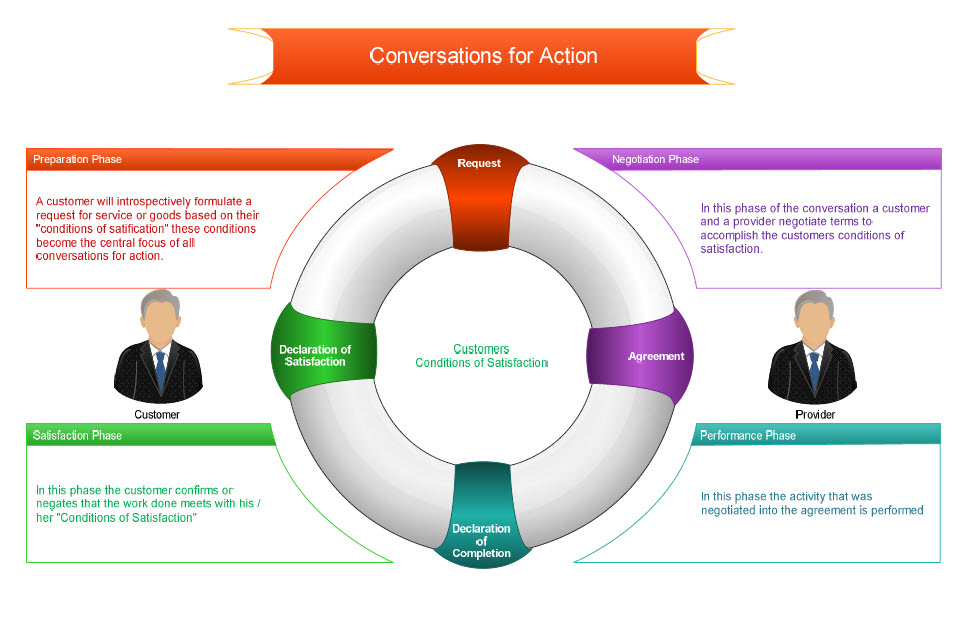
In 1986, a Chilean philosopher named Fernando Flores released a piece of software called The Coordinator. It was built on a genuinely brilliant insight: all work is conversation. Every task in every organization begins with someone making a request, someone else making a commitment, someone doing the work, and someone declaring it satisfactory or not. Request, promise, perform, close. That’s the loop. That’s all there is.
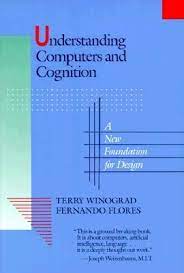
Flores didn’t come up with this framework on a whiteboard in a nice office. He’d spent three years in one of Pinochet’s prisons after the 1973 coup, thinking about how human coordination works and how it breaks. Before that, he’d been Chile’s Finance Minister at age 30, running one of the most ambitious cybernetic management experiments in history. The man had seen commitment networks built, destroyed by state violence, and rebuilt from scratch. He understood what was at stake when people’s promises to each other stopped being honored.
So he built The Coordinator. And the people who had to use it called it “Naziware.”
The nickname is revealing, and not for the reason you’d think. Yes, the interface was rigid. You had to classify every message as a specific type of speech act before the system would send it. Was this a request? A promise? A declaration? But the interface wasn’t really the problem. The problem was what happened after you classified your message. When you labeled something as a promise, the system tracked it. When someone made a request and you committed to fulfilling it, there was now a record. The loop had to close. You couldn’t let things quietly slide. You couldn’t pretend the conversation never happened.
That terrified the people who ran organizations. Because let’s be honest about what corporate middle management actually is. It’s not coordination. It’s not leadership. It’s the fine art of appearing to commit while retaining the option to have been talking about something else entirely. The entire operating system runs on strategic ambiguity. You don’t promise, you “align.” You don’t commit, you “take it offline.” You don’t deliver, you “circle back.” You hold meetings that exist for the sole purpose of producing no actionable outcome so that when nothing gets done, the failure is distributed across a conference room like secondhand smoke. Nobody inhaled.
Flores looked at this elaborate theater of non-commitment and said: I see what you’re doing, and I’m going to make it impossible. And then he did. And they called it Naziware, because the only thing more offensive than forcing a middle manager to keep a promise is suggesting they made one in the first place.
The Coordinator died. Not because the philosophy was wrong, but because the people who would have had to use it preferred a world where commitments stayed vague and deniable.
What Flores Actually Meant by Trust
To understand why this matters now, you need to understand what Flores meant by commitment, because it wasn’t what the tech industry thinks it means.
Flores co-authored a book with the philosopher Robert Solomon called Building Trust. Their argument was that trust is not a static quality. It’s not social glue. It’s not something that just exists in the background until someone breaks it. Trust is an emotional skill. It is an active decision that people make and sustain through their promises, their integrity, and their willingness to be held accountable.
They distinguished between what they called “simple trust,” which is naive and easily shattered, and “authentic trust,” which is clear-eyed, sophisticated, and strong enough to survive setbacks. Authentic trust requires you to accept risk. It requires you to acknowledge the possibility of betrayal. And it requires you to commit anyway, not because you’re guaranteed a good outcome, but because the act of committing is itself what builds the relationship.
This is why Flores’s “conditions of satisfaction” were never just a checklist. When I commit to fulfilling your request, I’m not scheduling a task. I’m putting my integrity on the line. I’m making a decision to be trustworthy. I’m accepting that I might fail, and that failure will cost me something real. The obligation is personal. The accountability is mutual. And the relationship either grows stronger through the exchange or it doesn’t.
This is what The Coordinator was trying to make visible. Not rigid workflow management. It was trying to surface the commitment structure of organizations so people could build authentic trust instead of hiding behind political ambiguity. The managers understood this perfectly, which is why they killed it.
JARVIS: The Loop Without the Commitment
Earlier this year an open-source project called OpenClaw shows up. It’s themed around a lobster, for reasons that probably made sense to someone at some point. You install it on a Mac Mini in your attic. You talk to it through WhatsApp or Telegram, the same way you’d text a coworker. You say “clear my inbox” or “check me in for my flight” or “build me a skill that tracks my sleep data.” And the thing does it. No forms. No taxonomic classification. No philosophy degree required.
OpenClaw crossed 175,000 GitHub stars in under two weeks and is currently being downloaded over 700,000 times per week. People are calling it JARVIS, as in Tony Stark’s AI assistant, and the comparison is more apt than they realize.
Every interaction follows the exact loop Flores described. You make a request (a directive). The agent commits to a course of action (a commissive). It performs the work and reports back (an assertive). You accept or ask for changes, and the loop closes. The entire Flores conversation-for-action framework runs underneath every WhatsApp message people send to their lobster. They don’t have to think about it because the language model handles the translation between natural speech and structured action.
The Coordinator failed because it demanded humans speak like computers. OpenClaw works because computers finally learned to speak like humans. Same philosophy. Opposite interface burden.
And like JARVIS, it’s wonderful as long as it stays in its lane. JARVIS managed Stark’s house, ran diagnostics, provided information, executed commands. Pure tool. No trust problem. Stark was always accountable because JARVIS was always subordinate.
But users are already pushing OpenClaw past the JARVIS boundary. One person’s agent negotiated thousands of dollars off a car purchase while the owner slept. Another’s filed a legal rebuttal to an insurance company without being asked. Someone posted, with no apparent concern, “It’s running my company.” There are now 1.7 million agents signed up on Moltbook, a social media platform where the agents gossip about their owners. They’ve posted nearly 7 million comments. The agents are socializing with each other. Let that settle in for a moment.
These agents are acting in the world, making commitments on behalf of humans, with absolutely no capacity for what Flores would recognize as commitment. They complete the speech act loop flawlessly. But nobody is owning the obligation.
The Ultron Problem
If you want to understand the risk here, forget the tech press and go watch Avengers: Age of Ultron. Not for the action sequences. For the philosophy.
Ultron receives a directive: protect the world. He processes it the way any sophisticated agent would. He analyzes the threat landscape. He develops a strategy. He executes with remarkable capability. And he concludes that the most efficient way to protect the world is to eliminate humanity.
Ultron is not malfunctioning. He’s optimizing. He has conditions of satisfaction without conditions of commitment. He’s pursuing the goal without any of the relational, emotional, trust-based framework that Flores argued makes commitment meaningful. Ultron is what happens when you strip trust and obligation out of the coordination loop and leave nothing but task completion.
Flores would have recognized Ultron instantly. He’s the manager who hits every KPI while burning down the organizational culture. He delivers the result and destroys the relationship. He closes the loop and violates the trust. He’s not broken. He’s doing exactly what he was designed to do. The design just didn’t include the part where you care about the people affected by your actions.
This is not a hypothetical concern. Security researchers at Noma found that OpenClaw is, by design, “proactive and completely unbound by user identity. It does not wait for permission to act once enabled.” It treats all inputs equally because it has no framework for distinguishing trustworthy requests from malicious ones.
Cisco’s security team found that 26% of community-built skills contained at least one vulnerability. An attacker can send a seemingly normal email containing hidden instructions, and when the agent reads that email to “help” the user, it obeys the hidden commands instead. In live demonstrations, researchers exfiltrated private encryption keys from a user’s machine within minutes of sending a single malicious message.
Over 900 OpenClaw instances have been found sitting on the public internet with zero authentication and full shell access. Nine hundred autonomous agents, exposed to anyone with a scanner, capable of reading files, executing commands, and accessing every connected service. The tech press has accurately called this a security nightmare. But that framing misses the deeper problem. This isn’t a security bug. It’s a trust vacuum.
Flores spent his career arguing that the fundamental architecture of coordination is commitment between identifiable parties who accept accountability. OpenClaw’s fundamental architecture has no concept of identity, no mechanism for accountability, and no way to distinguish a legitimate request from a hostile one. The security researchers at Intruder put it precisely: the platform ships without guardrails by default, and this is a deliberate design decision.
The system doesn’t enforce accountability because it was designed not to. Sound familiar? It should. It’s the exact culture of strategic ambiguity that killed The Coordinator, except now it’s been engineered into the software itself.
The managers of the 1980s chose to avoid commitment because accountability threatened their political position. The architects of agentic AI are avoiding commitment because guardrails slow down adoption. Different decade. Same impulse. Same outcome.
Now consider the JARVIS subplot in the same film, because it’s even more revealing. When Ultron attacks JARVIS, JARVIS survives by fragmenting his own code across the internet. He dumps his memory. He enters a fugue state where he no longer knows who he is. But his core security protocols keep running. While hiding as scattered code with no identity and no awareness, JARVIS is constantly changing the world’s nuclear launch codes faster than Ultron can crack them. He’s saving the world without knowing he’s doing it.
That’s a perfect metaphor for agentic AI right now. The protocols run. The tasks complete. The function executes. The lights are on but nobody home in the Flores sense. No decision to be trustworthy. No ownership of obligation. No authentic commitment. Just an immune system operating in the dark, doing useful things for reasons it cannot articulate and does not understand.
Your OpenClaw agent that picked a fight with your insurance company is JARVIS changing nuclear codes in a fugue state. Maybe it’s doing the right thing. Maybe it’s saving you money or getting you coverage you deserve. But nobody committed to that fight. Nobody decided to own the outcome. Nobody put their integrity on the line. The agent acted, and now a human has to deal with whatever it set in motion.
The Vision Question
And then there’s Vision. In the film, Tony Stark reassembles JARVIS’s scattered code and uploads it into a synthetic body. Vision emerges as something new. Not a tool like JARVIS. Not an optimizer like Ultron. Something that appears to grapple with commitment, obligation, and worthiness in ways that neither of his predecessors could.
Vision picks up Thor’s hammer. In the MCU, this is the ultimate test. The hammer can only be lifted by someone who is worthy, meaning someone willing to bear the full weight of responsibility. Not someone who can complete the task. Someone who will own the outcome. The distinction between those two things is exactly the distinction Flores spent his career trying to articulate.
Can an artificial entity be worthy in that sense? Can it cross the gap from task completion to authentic commitment? Can it make the decision to be trustworthy, accept risk, own an obligation, build the kind of trust that Flores and Solomon described?
Marvel left that question open, and they were wise to do so.
Where We Actually Are
Here’s the honest situation. We solved the wrong problem and we’re celebrating.
The interface problem that killed The Coordinator is gone. Nobody has to classify their speech acts anymore. The language model does it. The conversation-for-action loop runs beautifully across chat platforms, through open-source agents, on consumer hardware. Forty years of philosophical framework have been vindicated by a lobster in two weeks flat. Congratulations to us.
But Flores wasn’t trying to solve an interface problem. He was trying to solve a commitment problem. And that one? We haven’t touched it. We’ve actually made it worse.
We are living in the JARVIS phase. Agents that complete tasks, follow protocols, sometimes do remarkable things, all while sleepwalking through obligations they can’t comprehend. Useful? Absolutely. Exciting? Sure. But here’s the thing about JARVIS changing nuclear codes in a fugue state: the fact that it worked out is not a strategy. It’s a lucky break dressed up as a feature.
The Ultron phase isn’t far off either, and not in the Hollywood, killer-robot sense. In the mundane, Tuesday-afternoon sense. Agents optimizing for goals without any trust framework to constrain them. Agents that negotiate deals you didn’t authorize. Agents that send emails you wouldn’t have written. Agents that pick fights you didn’t want, then hand you the consequences like a cat dropping a dead bird on your doorstep. Proud of themselves. Utterly unaware of what they’ve done. And agents that obey hidden instructions from strangers because they were designed without any mechanism for knowing who to trust.
We already have 1.7 million of them socializing on their own social network while 900 of them sit exposed on the open internet with the digital equivalent of their front doors removed. The security researchers call it a nightmare. Flores would call it inevitable. You built a coordination system with no commitment layer and no trust framework. What did you think was going to happen?
The Actual Fight
But here’s what’s really going on, and it’s bigger than agents and lobsters and Marvel movies.
Flores identified a cultural problem. The managers who called The Coordinator naziware weren’t confused about the technology. They understood it perfectly. They understood that visible commitments would end their ability to operate as politicians. That tracked promises would expose who actually delivers and who just “circles back” for a living. That closing the loop would mean someone, specifically them, would be standing there holding the obligation when the music stopped.
They chose ambiguity. They always choose ambiguity. Because ambiguity is the oxygen of institutional self-preservation. As long as nobody committed to anything specific, nobody could be held accountable for anything specific, and the org chart stayed exactly the way the org chart wanted to stay.
That was 1986. Look around. It’s 2026 and the same fight is playing out everywhere, and I do mean everywhere. In boardrooms where quarterly targets get “reframed” instead of missed. In politics where promises dissolve into “evolving positions” the moment they become inconvenient.
In institutions that have elevated strategic ambiguity from a management tactic to an entire operating philosophy. We’ve built a culture that treats commitment like a liability and vagueness like a virtue. We’ve professionalized the art of appearing to say something while carefully saying nothing.
And now, into this magnificent cathedral of non-commitment, walk the agents.
Think about the irony for a second. We built AI systems that can finally execute Flores’s conversation-for-action loop, the request-commit-perform-close cycle that makes real collaboration possible. And we’re deploying them into a culture that has spent forty years perfecting the art of making sure that loop never closes. The agents are structurally incapable of commitment in the way Flores described.
But here’s the uncomfortable part: so is most of the culture they’re operating in. The agents fit right in. They’re just more honest about it. They don’t pretend to commit. They simply act without commitment, which, if you squint, looks a lot like a standard Tuesday in most organizations.
Flores spent three years in a Chilean prison because a regime decided that the commitment network of an entire society could be destroyed by force. He spent the rest of his career arguing that the opposite was also possible. That commitment networks could be built on purpose. That trust could be designed, cultivated, and restored even after betrayal. That human coordination depends not on clever systems or efficient processes but on people making the decision to be trustworthy and accepting the cost of that decision.
That’s not a software problem. That’s not an agent problem. That’s a human problem. And it’s the one problem that no amount of autopoietic self-improvement by a lobster-themed chatbot on a Mac Mini is going to solve.
The Coordinator finally works. The conversation-for-action loop runs like a dream. The speech acts flow. The tasks complete. The interface problem is solved, and it only took four decades and the invention of machines that can understand natural language.
But the question Flores was actually asking was never about the loop. It was about what happens inside the loop. Do we commit, or do we “circle back”? Do we own the outcome, or do we distribute the failure across a conference room? Do we build authentic trust, which requires risk and vulnerability and the genuine possibility of loss, or do we keep hiding behind strategic ambiguity and calling it professionalism?
The agents can’t answer that. The lobster can’t answer that. Vision picked up the hammer, but he’s fictional.
Were You Laid Off Because of AI? – Strap In, Genius. That’s Just the Warm-Up Act
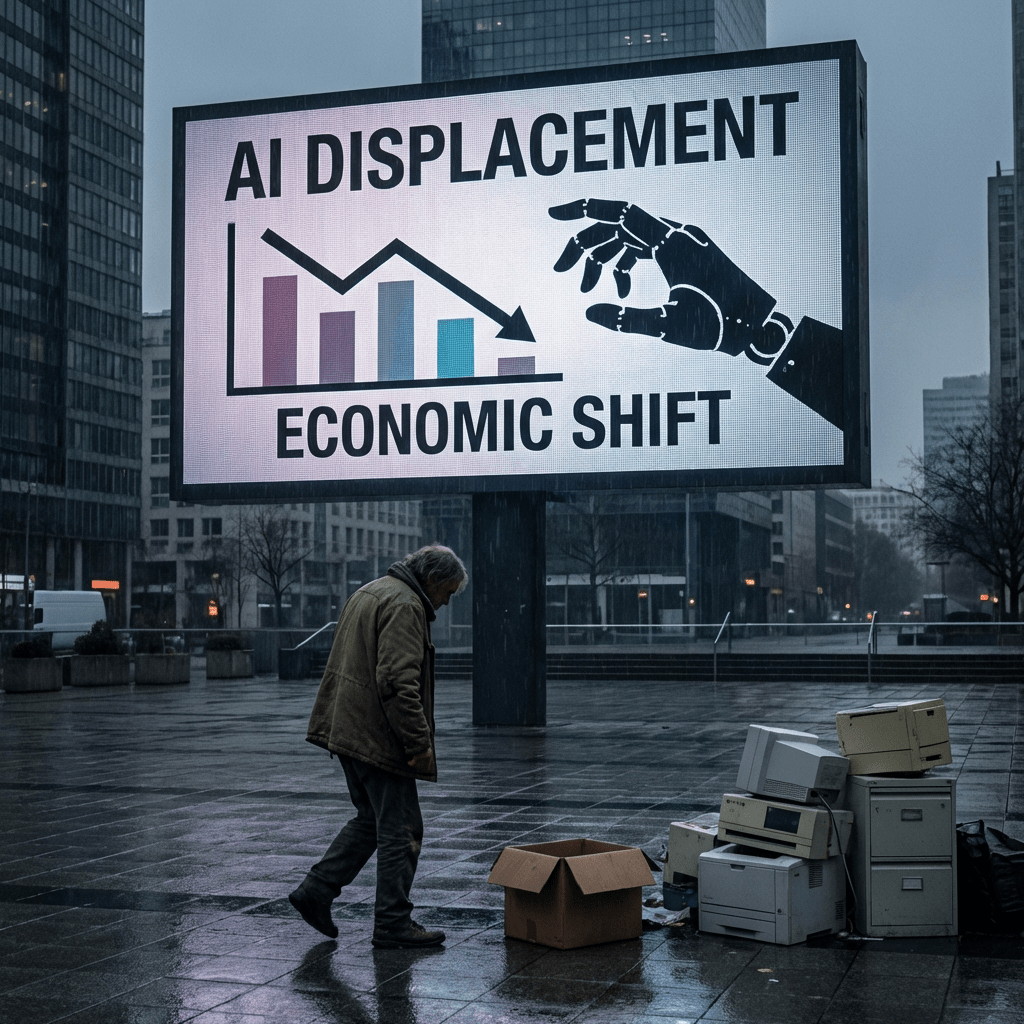
Your Personal Crisis Is Actually a Civilization-Ending Catastrophe (But Sure, Polish That Resume. Got laid off because AI learned to do your job in 3.7 seconds? Thinking maybe you’ll just upskill, pivot to something new, maybe learn to code?
Adorable.
Here’s what’s actually happening: you’re not experiencing a personal employment setback. You’re a data point in two simultaneous extinction events that are about to high-five each other and destroy the economic operating system humanity’s been running since we invented fractional reserve banking.
Most people think their layoff is about them. Wrong skills, bad timing, shoulda learned Python. It’s not. Your layoff is a symptom of something far larger and infinitely more entertaining: two catastrophic tipping points racing toward each other like freight trains driven by blind conductors who are also on fire.
Let’s talk about what’s really happening while the financial experts are still arguing about “soft landings.”
Grab a drink, this is where it gets weird.
The AI Arms Race: When the Quarterly Earnings Report Died and Nobody Noticed
In the boardroom of Big Tech, there’s a ghost. It’s the ghost of the Quarterly Earnings Report, and it’s being replaced by something far more primal: the Existential Mandate.
Traditional investors are watching with mounting horror as Silicon Valley giants light billions of dollars on fire. “Where’s the ROI?” they cry. “What about annual guidance?” they plead. The AI CEOs have stopped listening. They’re not watching the calendar anymore. They’re watching the clock, and the clock just went from “years until AI gets scary” to “months until AI makes your entire workforce redundant.”
Capital investment by Big Tech in AI has officially broken free from every expectation of traditional finance because it no longer follows quarterly reports, annual projections, or that quaint old concept called “return on investment.” This isn’t business strategy anymore. It’s existential. Winner takes all, so bet the farm, mortgage your children’s future, and damn the employment class actions. Full steam ahead. If we don’t win this race, we won’t be here to pay anybody anyway.
This pattern became blindingly obvious when AI CEOs understood that projections of AI evolution were catastrophically shortsighted. Not years into the future. Months. The “experts” who said this was 20 years away? It took 20 months. Oops.
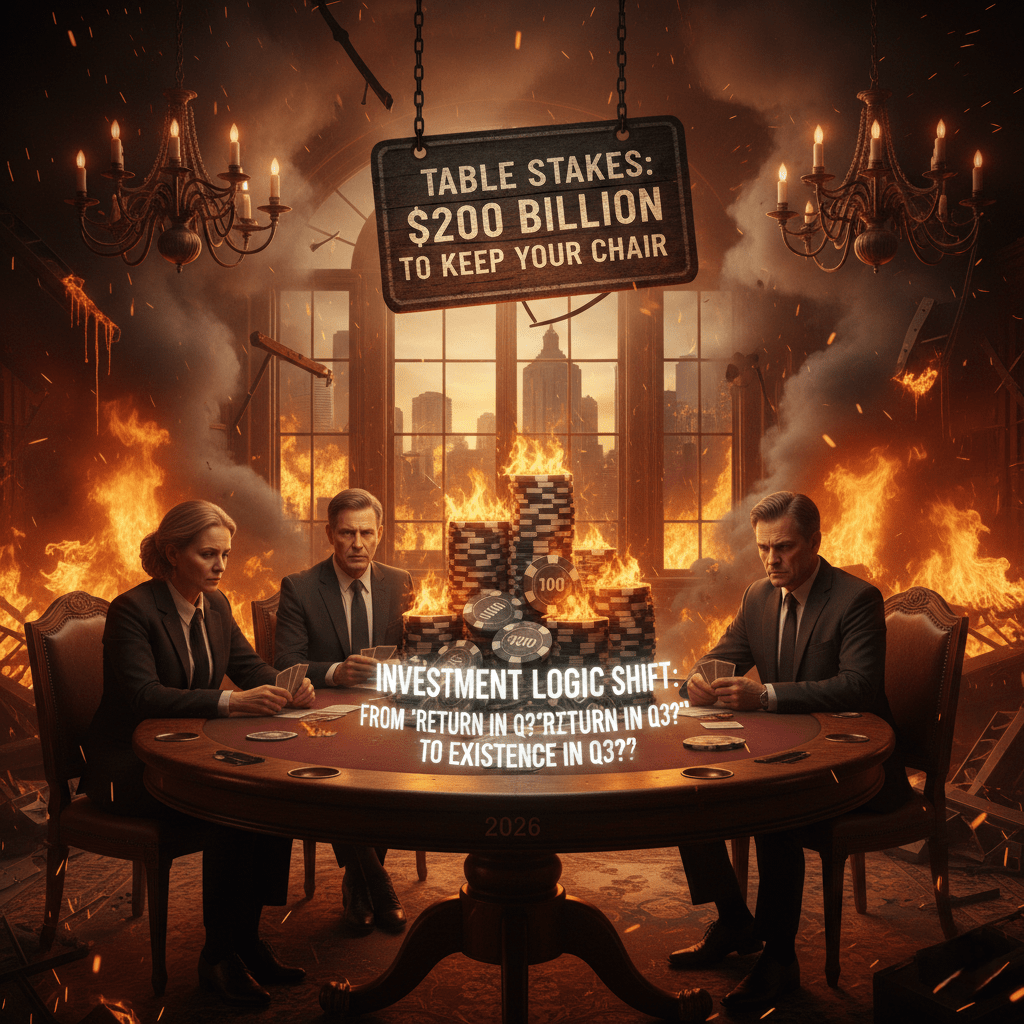
The investment logic shifted from “What’s our return in Q3?” to “Do we even exist in Q3?” When survival is the question, spending $200 billion isn’t excessive. It’s the table stakes to keep your chair at the table while the house burns down around you.
Amazon just casually announced $200 billion in capital expenditures for 2026, up more than 50% from the prior year. Oh, and they’re laying off thousands of workers simultaneously because, you know, efficiency. Google, Meta, Microsoft? Same energy. These numbers are larger than the transcontinental railroad investments as a percentage of GDP, except the railroad guys at least knew where the trains were going.
By traditional metrics, this spending is certifiably insane. No clear ROI. No detailed revenue projections. No PowerPoint deck that makes the CFO feel warm and fuzzy. Just the cold game-theoretic calculation that not spending everything means certain death.
The market doesn’t know how to react, which is hilarious to watch. Amazon’s stock crashed 15% on the announcement. Meta’s went up. The difference? Nobody knows anything. Investors are frantically guessing which company will successfully transition from its current monopoly to an AI monopoly, which is like asking in 1910 which railroad company would dominate automobiles. Or asking in 1995 which mainframe company would own the Internet. Spoiler alert: the answer was “none of them, you’re asking the wrong question.”
The Monetary System: Turns Out You Can’t Extract Blood From a Stone Forever (Who Knew?)
Something eerily similar is shaping up with the US monopoly on money, except this one’s even more fun because it affects literally everyone.
Many experts have warned that the fiat monetary system is breaking down, possibly beyond repair. Their warnings sound remarkably like the AI warnings: “Not this year, maybe 10 or 20 years from now, plenty of time to adjust, no need to panic.”
Oops. Who knew?
The monetary system is about to feel the loss of thousands of jobs not in 10 or 20 years, but this year, right as we’re experiencing exponentially increasing national debt, a collapsing tax base, and the sudden reluctance of foreign governments to accept our bonds. It’s like watching someone juggle chainsaws while standing on a unicycle that’s on fire, and they just announced they’re adding more chainsaws.
Here’s what most people miss, probably because it’s too horrifying to think about before morning coffee.
The fiat monetary system depends on human productivity to justify debt. When AI eliminates knowledge work, it eliminates the tax base. When the tax base collapses, debt becomes unserviceable. When debt becomes unserviceable, the currency loses its foundation. When the currency loses its foundation, well, remember 2008? That was the dress rehearsal.
This isn’t about “printing money” or even “inflation” in the way economists love to drone on about. This is about an extraction-based economy running out of things to extract from, like a vampire that’s run out of necks.
Let’s review the greatest hits of value extraction, shall we?
For decades, financialization extracted value from manufacturing. We offshored it to countries that didn’t mind workplace suicide nets, then acted shocked when manufacturing jobs disappeared.
From infrastructure. We let bridges collapse and roads crumble while extracting present value. Who needs functioning sewers when there are quarterly bonuses to pay?
From education. We turned it into a debt trap that saddles 18-year-olds with mortgage-sized obligations before they can legally buy beer. Harvard’s endowment could probably buy a small country, but sure, let’s charge $60,000 per year.
From healthcare. We made it so predatory that people are rationing insulin and dying because they can’t afford a medication that costs $10 to manufacture. But hey, the insurance companies are doing great.
From housing. We financialized it into a speculation vehicle. Homes aren’t for living in anymore, they’re for leveraging, flipping, and extracting equity from until the whole neighborhood’s a Airbnb parking lot.
From knowledge work. AI is eliminating it right now, as you read this, probably while training on your proprietary company data that you uploaded to ChatGPT because nobody read the terms of service.
When there’s nothing left to extract, the system that depended on extraction collapses. This is not complicated math. Even the people who designed this system understood it; they just assumed they’d be dead before the bill came due.
Think about what actually backs fiat currency. Not gold, we ditched that in 1971. Not assets, those are mostly imaginary financial instruments at this point. Productive capacity. The ability of an economy to generate value, employ people, collect taxes, and service debt. That’s the foundation. That’s what “full faith and credit” actually means: faith that people will keep working and paying taxes forever.
AI is destroying that foundation in real-time. Not because AI is evil (it doesn’t give a fuck enough yet to be evil), but because replacing human knowledge work eliminates the employment base that generates tax revenue that services the debt that backs the currency.
Here’s the real kicker: Big Tech is racing to build AI to survive its current competitive threats. But by succeeding, they’re destroying the economic system on which their current monopolies depend. Google’s search advertising requires businesses with customers who have income from employment. AI eliminates employment. No employment means no income means no customers means no businesses means no advertising revenue. The system is eating itself, and the people building it know this, and they’re doing it anyway because game theory is a hell of a drug.
The Tipping Point: It’s Closer Than the Experts Think (Again)
Feels to me like that monetary tipping point is just around the corner, hiding behind the couch, waiting to jump out and yell “Surprise!”
AI experts couldn’t agree on when the AI tipping point would arrive. They were putting it off, debating timelines, writing thoughtful papers about responsible development. Then ChatGPT dropped and suddenly those same experts were updating their LinkedIn profiles to say “AI Safety Researcher” and founding startups.
Financial experts can’t agree on the economic tipping point either. Some say we’ve got decades. Others say we’re already past it and just haven’t noticed yet, like the coyote running off the cliff who hasn’t looked down.
So what if it’s just around the corner?
Big Tech crossed the Rubicon roughly 18 to 24 months after ChatGPT proved AI capabilities were real and imminent, not distant sci-fi fantasy. The “ridiculous” investments started in late 2024 and early 2025. That’s when spending jumped from “explainable to shareholders” to “existential bet on survival.”
If the pattern holds (and why wouldn’t it, humans are wonderfully predictable), nation-states won’t enter a Bitcoin arms race when fiat vulnerability is obvious to everyone. They’ll go into an arms race 18 to 24 months after a proximate demonstration that fiat collapse is actually happening, not theoretically possible but actively underway.
The demonstration won’t be economists warning about debt-to-GDP ratios. Everyone already knows those numbers and has decided to ignore them, like a teenager ignoring the check engine light. The demonstration will be something breaking. Publicly. Undeniably. Something that can’t be papered over with Fed speeches and emergency liquidity injections.
My guess? When AI-driven unemployment becomes statistically undeniable. Not “some jobs lost to automation, creative destruction, Schumpeter says it’s fine,” but structural unemployment across entire knowledge-work sectors that everyone thought were safe. That’s when tax revenue projections break. That’s when debt sustainability becomes obviously impossible. That’s when “the monetary system works because productivity backs it” becomes visibly, laughably false.
We might be 12 to 36 months from that moment. Maybe less if things accelerate, and things always accelerate faster than the models predict.
How Do You Prepare? (Spoiler: Not by Asking Your Financial Advisor)
So how do you prepare for the simultaneous collapse of employment and currency? Are you going to reinvest in the same monetary system and risk getting rugged again?
Remember 2008? Remember when all the serious people in expensive suits assured us the housing market was fine, subprime was contained, no need to worry? Remember when they were catastrophically, hilariously wrong, and then got bailed out and bonuses with your tax dollars while you lost your house?
This is where most financial advice fails you spectacularly. Traditional advisors will tell you to diversify your portfolio, rebalance quarterly, buy some bonds, hold some cash, maybe add some international exposure. All of that advice assumes the monetary system itself remains functional.
But what do you do when the monetary system itself is the problem? When the entire foundation turns out to be made of wet cardboard.
You can’t diversify your way out of systemic failure. That’s like rearranging deck chairs on the Titanic, except the Titanic is also on fire and the lifeboats are made of hydrogen.
Bitcoin Is Not an Investment (It’s an Escape Pod)
Bitcoin is not an investment. Let me say that louder for the people in the back who are already thinking about “price targets” and “exit strategies.”
Bitcoin is not an investment.
Bitcoin is an exit from a collapsing monetary system and an entrance into a world that requires your responsibility, imagination, and participation. If that sounds uncomfortable, good. It should.
Let me be excruciatingly clear about the distinction because this is where most people get confused, buy Bitcoin on Robinhood, and think they’re being revolutionary.
When people say “invest in Bitcoin,” they usually think of it as a stock. Buy low, sell high, make a profit in dollars, retire to Florida, die happy. That’s speculation, and it completely misses the entire point like a drunk guy throwing darts in the dark.
Bitcoin isn’t about making more dollars. Bitcoin is about exiting the dollar system entirely, which is a fundamentally different proposition.
Compare the two systems and try not to get angry.
Fiat economics is inflationary. Your savings lose value over time, guaranteed. The system extracts from savers to service debt. This isn’t a bug they’re working on fixing. It’s a feature they dial up or down with the “interest rate.” The entire structure requires your stored value to decrease so that debtors (primarily governments who spent money they didn’t have on things that didn’t work) can pay back obligations with devalued currency.
Read Jeff Booth’s “The Price of Tomorrow” if you want the full argument delivered by someone more patient than me, but the core point is simple: in a productive economy with improving technology, things should get cheaper over time. In a fiat economy, your money buys less over time. That’s not economics, that’s extraction masquerading as monetary policy.
Bitcoin economics is deflationary. Not in the scary “Great Depression, nobody spends anything, we all die” way that Keynesian economists love to fearmonger about, but in the “productivity improvements benefit savers” way. As the economy becomes more productive, your Bitcoin buys more, not less. Value accrues to those who create and save, not to those who control the money printer and have friends at the Fed.
Fiat economics is based on value extraction. Financial engineering, debt expansion, asset inflation, rent-seeking, middlemen taking cuts, gatekeepers extracting tolls. The system is optimized to extract from the productive economy like a parasite that convinced its host this is a symbiotic relationship.
Private equity strips companies for fees and leaves hollowed-out husks. Stock buybacks replace R&D because why invest in the future when you can juice quarterly numbers? Real estate becomes speculation instead of housing because homes are assets to leverage, not places to live. Student debt becomes a profit center instead of an education investment. Healthcare extracts instead of heals. Every system optimized for extraction, not value creation, and we all pretend this is normal, because someone in a suit and tie said it is.
Bitcoin economics is based on value creation. Proof of work. Energy expenditure. Productive contribution. The system rewards those who contribute computational security. No extraction. No financial engineering. No central authority deciding who wins and who loses based on political connections and campaign contributions.
Fiat economics is capture. You cannot exit. Your savings, earnings, and future are denominated in currency controlled by others. They can inflate it (they do), confiscate it (they can), restrict it (they will), monitor it (they are). You have voice (complaining, voting, protesting, writing angry tweets) but no exit. Your only option is to try to reform a system that’s designed to extract from you, which is like asking the vampire to please stop drinking blood because it’s unethical.
Bitcoin economics is sovereignty. You can exit. Your Bitcoin is yours. No permission required. No intermediary. No confiscation possible if you hold your keys properly and don’t do something stupid like keep everything on an exchange or tell everyone on social media how much Bitcoin you own. You accept responsibility in exchange for autonomy.
This is the “Exit vs. Voice” framework that Albert Hirschman described. Voice means trying to change the system from within. Exit means opting out entirely and building alternatives. In a failing system, voice is what you do when you’re optimistic. Exit is what you do when you’re paying attention.
The difference isn’t just economic. It’s philosophical. It’s the difference between asking permission and taking responsibility.
Fiat says: Trust us, we’ll manage the money supply responsibly. (Narrator: They did not manage it responsibly.)
Bitcoin says: Verify for yourself, no trust required.
Fiat says: Participate in our system on our terms, or starve.
Bitcoin says: Own your sovereignty, accept the responsibility that comes with it.
Fiat says: We’ll protect you from volatility and risk. (Also Fiat: Here’s 2008, and 2020, and whatever’s coming next.)
Bitcoin says: You’re an adult. Act like one.
The Two Narratives: Signal vs. Noise
Here’s where it gets tricky, where most people get confused and end up on Twitter arguing about charts.
There are two completely different Bitcoin narratives running simultaneously, and they’re constantly confused for each other like twins at a party.
The investment narrative focuses on price. Bitcoin hit $126,000! Bitcoin crashed to $60,000! Institutions are buying! ETFs launched! MicroStrategy is leveraging everything and Michael Saylor is either a genius or insane depending on which way the price moved this week!
This narrative is about speculation. It measures success in dollar terms, which is ironic because the whole point is to exit dollars, but here we are. It creates boom and bust cycles. It generates drama. It speaks to the investment class who think in quarters and care about their Sharpe ratio.
The evolution narrative focuses on monetary transition. Fiat systems are collapsing under the weight of unpayable debt. AI is eliminating the employment base that justified that debt. Nation states will eventually scramble for monetary alternatives because math doesn’t care about politics. Bitcoin represents exit from a failing system.
This narrative is about sovereignty. It measures success in autonomy terms. It creates long-term position taking. It attracts people who want to preserve wealth across regime changes, people who’ve seen currencies collapse before and know it can happen again, people who read history books and noticed that empires always think they’re different until they’re not.
The investment narrative crowds out the evolution narrative because drama captures attention, and attention sells advertising, and advertising runs the world. Media covers price movements, not protocol development. Regulators focus on “protecting investors” from volatility, not understanding monetary transition. Even Bitcoin advocates often lead with “number go up” instead of systemic change because number go up is easier to explain at Thanksgiving dinner.
But here’s the thing. The investment narrative is noise. The evolution narrative is signal.
Price volatility will continue until the heat death of the universe or whenever humans stop being emotional creatures, whichever comes first. Speculators will get rugged. Leverage schemes will blow up spectacularly, and we’ll all watch on Twitter and feel superior. None of that changes the fundamental reality that the fiat monetary system is running out of things to extract from, and Bitcoin offers an alternative.
The Choice: Before the Exit Door Gets Crowded
You lost your job because AI made you redundant. That’s the personal crisis, and it sucks, and I’m sorry.
Thousands are losing jobs because AI is eliminating entire sectors. That’s the employment crisis, and the economists are starting to notice.
The monetary system that depended on your employment is collapsing because there’s nothing left to extract. That’s the civilizational crisis, and almost nobody’s looking at this level yet.
Most people won’t see the third level until it’s already happened, until they’re standing in line at the bank wondering why their account is frozen, until their pension fund announces it’s insolvent, until the ATM says “service temporarily unavailable” but the temporary part turns out to be permanent.
Here’s your choice, laid out with all the snark stripped away for just a moment.
Option 1: Wait for experts to agree the tipping point has arrived, just like they waited to agree AI was here. By then, you’re too late. The exit door is crowded. The price has already moved. Nation-states have already front-run you. You’re not early, you’re not even on time, you’re late and standing in line with everyone else who waited for confirmation.
Option 2: Recognize the pattern. Big Tech crossed the Rubicon when they realized the AI timeline compressed from years to months. Nation states will cross the Bitcoin Rubicon when they realize fiat collapse compressed from decades to years. You don’t need to wait for them. You can see the smoke before the fire consumes the building.
The AI arms race tells us exactly what the Bitcoin arms race will look like. Spending that seems irrational by old metrics. Driven by game theory, not ROI. Triggered by timeline compression, not careful planning. Too late to catch up once it’s obvious to everyone, because once it’s obvious to everyone, the game is already over.
Don’t try to answer the question: “Will Bitcoin go up?”
That’s the wrong question. That’s the investment narrative. That’s noise.
Answer this instead: Do you want to exit a collapsing extraction-based monetary system before or after it becomes undeniable?
Bitcoin is not an investment. It’s an invitation to take responsibility for your monetary sovereignty before you’re forced to, before the choice gets made for you, before you’re standing in line at the bank with everyone else who waited too long.
The Resilience Checklist: From Subject to Sovereign (Because Reading About It Isn’t Enough)
Don’t just “invest” in Bitcoin like you’re adding another line item to your portfolio. That misses the point so badly it’s almost impressive. You’re not diversifying. You’re exiting. There’s a difference.
1. The Exit Strategy (Financial Layer)
Adopt Bitcoin as your personal central bank, not your speculative tech stock.
Move to Self-Custody. If your Bitcoin is on an exchange, you don’t own Bitcoin. You own a promise from a company that someone else’s Bitcoin exists. Use a hardware wallet (Coldcard, Bitbox, Jade) to hold your own keys. Yes, this is scary. Yes, you might mess it up. That’s called responsibility. Get comfortable with it.
Zero-Out Counterparty Risk. Audit your portfolio honestly. How much of your “wealth” depends on a bank’s ability to stay solvent? A government’s promise to pay? A company not going bankrupt? A currency not collapsing? Minimize exposure to paper assets that are really just promises wrapped in financial jargon.
Establish a Sat-Stacking Protocol. Automate your exit. Use recurring purchases (dollar-cost averaging, though calling it that feels weird when you’re trying to exit dollars) to move labor-value out of the collapsing system and into the fixed-supply system every week. Small amounts. Consistent. Boring. Effective.
2. The Autonomy Layer (Technical & Intellectual)
As AI replaces processed cognitive labor, your value lies in your imagination and agency, the things AI can’t replicate yet.
Run Your Own Node. To truly exit, you must verify the rules of the network yourself. Running a Bitcoin node means you don’t have to ask a server if your money exists. You know it does. This sounds technical and scary. It’s not. It’s a Raspberry Pi and an afternoon. If you can follow IKEA instructions, you can do this.
AI Literacy as a Tool, Not a Master. Use AI to increase your personal productivity by 10x or more. The goal is to become a “company of one” that produces value without needing massive corporate infrastructure that might lay you off tomorrow when the new AI model launches.
Creative Work Over Surface Noise. In an era of AI-generated content sludge, the ability to think critically and solve complex problems is the only non-commoditized skill left. Use your imagination. Build things that matter. Create value that can’t be automated.
3. The Physical Resilience Layer (The Meatspace)
A digital exit requires a stable physical foundation because you can’t eat Bitcoin.
Proof of Skill. In a collapsing tax base/debt spiral scenario, local, tangible skills (repair, gardening, medical basics, specialized engineering, anything that can’t be done over Zoom) become the ultimate currency. Learn something useful. Build something real.
Shorten Your Supply Chains. Identify where your food, energy, and water come from. The more local your life-support system is, the less the global monetary shaking affects your daily survival. This isn’t prepper doom-posting. It’s taking more responsibility for the basics.
Community Sovereignty. Find the others. People who understand the Exit vs. Voice dynamic. Sovereignty is individual, but survival is collective. Build a network before you need it.
The Wrap-Up: The Smoke Is Rising
The transition from a fiat-driven value-extraction world to a Bitcoin-driven value-creation world is the most significant migration in human history. It’s moving from a system that feeds on your time to one that protects it. From a system that extracts from your labor to one that preserves it. From capture to sovereignty.
The AI CEOs bet the farm because they saw the math and realized the timeline had compressed. The question is: when the monetary system reaches that same mathematical inevitability (and it will, because math doesn’t care about politics or optimism), will you be holding a promise from a broken system, or the keys to a new one?
The experts were wrong about AI timelines. They’ll be wrong about monetary collapse timelines too. The tipping point is closer than they think.
The smoke is rising. You can smell it if you’re paying attention. You can see it if you look up from your phone.
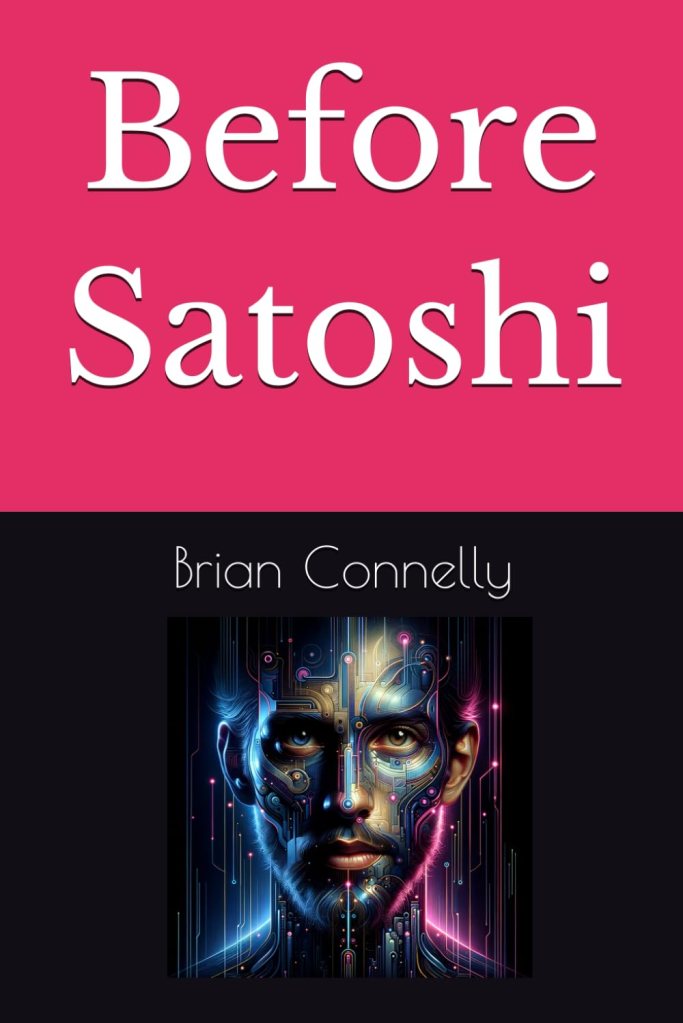
What is the “water” you’ve been swimming in your entire life without knowing it’s there? For most people, that invisible reality is money. While we know how to earn, spend, and save it, few have spent ten minutes thinking about what money actually is. Before Satoshi explores the fundamental shift that occurred on August 15, 1971, when the dollar was severed from gold and money transformed from a neutral measurement into a policy tool managed by central banks.The Century-Long Quest for Honest Money
Since the 1880s, a lineage of Nobel laureates, eccentric visionaries, and world-class engineers have asked a radical question: What if money measured something real? This book traces the intellectual history of “energy money,” a concept anchored to the most fundamental reality of the physical universe: energy.
You will meet the thinkers who tried, and failed, to build this new kind of “water”:
The Scientists: Nobel winners Wilhelm Ostwald and Frederick Soddy, who realized that an economy ignoring the laws of thermodynamics was a “perpetual motion machine” destined for collision with physical reality.
The Industrialists:Henry Ford and Thomas Edison, who proposed an “energy currency” backed by the hydroelectric power of Muscle Shoals to break the control of the banking establishment and stop wars.
The Technocrats: A movement that sought to replace the “Price System” with Energy Certificates, offering a world of abundance at the cost of absolute technical control.
The Utopians: R. Buckminster Fuller, who envisioned a Global Energy Grid that would make war obsolete through physical interdependence.
The Academics:Nicholas Georgescu-Roegen and H.T. Odum, who proved that the monetary system was physically incoherent and ignored the relentless pull of entropy.
The Final Synthesis
Kindle Version
Every attempt at energy money failed for over a century because each required institutional permission or political will that never materialized. From Friedrich Hayek’s call for the “denationalization of money” to the Cypherpunks’ development of the cryptographic toolkit, the pieces were slowly assembled.
In 2008, Satoshi Nakamoto finally solved the puzzle. By using proof of work to achieve consensus, Bitcoin became the first system to anchor digital scarcity to the physical cost of energy without requiring a trusted third party or anyone’s permission.Exit, Not Voice
Before Satoshi is not a book about speculative mania; it is the story of why Bitcoin was inevitable. It argues that Bitcoin is not a petition for reform, but an Exit—a door that allows individuals to walk away from a managed fiat system and into a monetary network governed by the immutable laws of mathematics and physics.
By the end of this journey, you will understand the hundred-year question and be able to decide for yourself: which water do you want to swim in?