
A Global Network. On October 29, 1969, ARPAnet delivered its first message. Fourteen years later ARPAnet adopted TCP/IP, and soon after Tim Berners-Lee invented the World Wide Web. Often confused with the internet, the web is just the most common means of accessing data online in the form of websites and hypertext. By the 1990s the internet was adopted by a large portion of the population.
Today you can pay your bills, pay your taxes, shop, register your car, renew your license research and, a plethora of other very important things. When the internet goes down a whole generation of young people emerge from their bedrooms wondering WTF. Gaming and dating and a whole host of other social interactions have become an intimate part of daily living. The fact is many of us with a smartphone in our pocket could not imagine life without the internet.
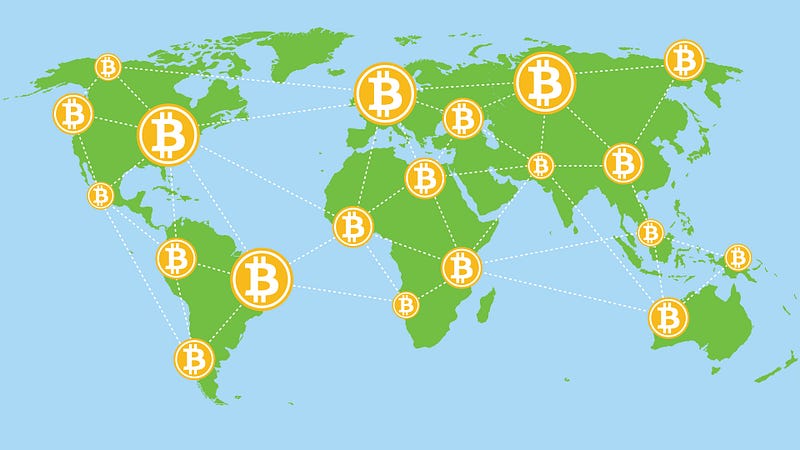
How does this technology evolution parallel with Bitcoin? Let’s say the internet took 20 years from inception to mainstream adoption. The smartphone adoption took half that time within 10 years many landlines were being canceled. 10 years from bitcoins inception awareness of the cryptocurrency has to reach the mainstream.
TCP/IP & Distributed Ledgers. TCP IP is one of the basic building blocks of the internet. The reliability of TCP IP is one of the main factors that allowed the internet to flourish. Bitcoin a distributed ledger works off a blockchain, The reliability of the Bitcoin blockchain is one of the main factors that allows Bitcoin to flourish.
Understanding these fundamental technologies has attracted many and like the internet in the 1998–2000 timeframe, those with vision are by putting money behind those visions. Just like many people who use the internet and don’t understand TCP/IP, many who use Bitcoin don’t understand blockchain, nor do they care to. Their primary concern is the result, I click on the link I see a new page, I send value to someone across the country in minutes rather than days.
As a young man, I remember my father a government scientist explaining to me the ARPAnet and why reliability was central to national defense. Later on, my livelihood was networking computers and people, working with hyper-text, and building some of the early network communities. I remember logging on to the world wide web and visiting what seemed like all 25 of the web sites.
Bulletin boards, newsgroups, AOL and Lotus Notes groups were some of the early network communities. They didn’t disappear when the world wide web became popular it took a while for them to give way to MySpace, Facebook, and Wikipedia. We will likely see Facebook Wikipedia and others morph into something new. The Bitcoin of 2009 is different than the Bitcoin of 2020.
Unlike the interstate highway system and the Hoover dam, network technologies tend to grow and change to meet the needs of the people that use them. And the people that used them tend to change in ways previously never imagined.
As someone who followed the birth of Amazon, Google, Facebook, Netflix, The progression of Bitcoin into our everyday lives seems to me to be a logical and practical evolution. Just like many telephone companies thought that the public telephone network could never be replaced by TCP/IP, many banks are thinking that the current banking system will never be replaced by Bitcoin. I’ve come to learn the only thing that you can count on is change. People trust reliability like TCP/IP and Bitcoin’s 99.9% uptime. Today “money for the internet”. Tomorrow?
