Or why Bitcoin’s electricity bill is the whole point
When I was six years old, my four brothers and I decided to hoist the youngest, Tommy, in a cardboard box fourteen feet into the air off the limb of a tree. None of us were engineers, so nobody thought about gravity or the structural integrity of cardboard. Just as my mother came outside to tell us to stop, the bottom of the box gave out, and Tommy came with it. Being hard-headed Irish, nobody was injured, and everyone was embarrassed.
Gravity didn’t ask whether we believed in it. It just showed up.
I didn’t see gravity that afternoon. I saw my little brother on the ground looking up at a box with no bottom. But I never questioned gravity again, and neither did Tommy. We didn’t need to see the force. We saw what it did.
That’s worth sitting with, because it answers the single biggest objection people raise when you try to explain Bitcoin to them: “But I can’t see it.”
You can’t see gravity either, but you trust it enough to walk downstairs in the morning. You can’t see the electricity behind your walls, but you trust it enough to plug your phone in at night. You’ve never once watched a digit physically move from your employer’s bank to yours, but you trust that your paycheck showed up on Friday. We trust invisible things constantly. We just need a reason to.
Last week we talked about mining, and what it actually means. Computers compete to earn the right to add the next page to Bitcoin’s global ledger. The first one to solve the problem gets to write that page and gets paid for doing it. Simple enough.
But that raises a fair question. Why should you trust the page they wrote?
This is where Proof-of-Work comes in. And the best way to understand it is to look at something you already trust without thinking about it.
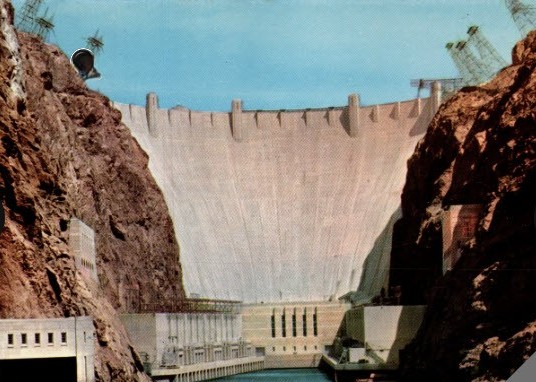
Look at the Hoover Dam.
Nobody questions whether the Hoover Dam is real. You can see it. You can touch it. But the reason you trust it has nothing to do with seeing it. You trust it because you understand, even if only intuitively, that something that massive required an enormous amount of energy, labor, and material to build. Nobody faked the Hoover Dam. Nobody woke up one morning and found it there by accident. The work is embedded in the thing itself, and that work is what makes it trustworthy.
The Pyramids at Giza are the same story, just older. Twenty years of labor. Two million blocks of stone. You look at them and your brain immediately does the math, even if you never studied engineering. Something this big, this permanent, this undeniable, required real effort in the real world. The proof is the structure. The structure is the proof.
This is exactly what Bitcoin’s Proof-of-Work does.
When a miner solves that problem and adds a new page to the ledger, the solution itself is evidence that real energy was spent in the real world. Not theoretical energy. Not pretend energy. Actual electricity, consumed and gone, that can never be recovered, reversed, or reused. Every page in Bitcoin’s ledger carries that stamp. The network can look at any page and verify, independently and instantly, that somebody paid a real cost to write it.
That spent energy is Bitcoin’s concrete. You can’t see it the way you can see the Hoover Dam. But you can verify it, which turns out to be more reliable than eyesight. Your eyes can be fooled. Math can’t.
This is what makes Bitcoin different from everything else in the digital world. A photograph can be copied for free. A document can be duplicated with a keystroke. An email costs nothing to send. In the digital world, copies are free, and that’s a problem if you’re trying to build something trustworthy. If copying is free, then cheating is free.
Proof-of-Work makes cheating expensive. If someone wanted to go back and tamper with a page in Bitcoin’s ledger, they wouldn’t just have to rewrite that page. They’d have to redo all the work for every page written after it, which means spending more electricity than all the honest miners on the network combined, in real time, while the network keeps moving forward. It’s not impossible the way magic is impossible. It’s impossible the way rebuilding the Hoover Dam with your bare hands while the river is still running is impossible. The physics don’t work.
And this is the right place to talk about something you’ve probably already heard: Bitcoin uses a lot of energy.
This is true. It does. And for a lot of people, that’s where the conversation stops. They hear that Bitcoin uses as much electricity as some small countries and they think, “That’s wasteful.” I understand the reaction. It sounds bad if you don’t ask the next question.
The next question is: what do you get for that energy?
Nobody walks up to the Hoover Dam and says, “What a waste of concrete.” They understand the concrete is there for a reason. It holds back the Colorado River and generates power for millions of people. The cost is real, and so is the value.
Bitcoin’s energy cost works the same way. That electricity isn’t being burned for nothing. It’s the thing that makes the ledger tamper-proof. It’s the reason no government, no corporation, no hacker, and no insider can go back and rewrite the record. Every kilowatt spent is a kilowatt invested in making the system honest. Take away the energy and you take away the security. You’d have a ledger anyone could edit, which is not a ledger at all. It’s just a spreadsheet.
It’s also worth noting what that energy is actually being compared to. The global banking system, the one most of us use every day without thinking about it, consumes an enormous amount of energy too. The data centers, the branch offices, the armored trucks, the ATMs, the clearing houses, the compliance departments, all of it runs on electricity, gasoline, and human labor. Nobody publishes that number on the front page because we’ve decided that system is normal. Bitcoin gets scrutinized because it’s new and because its energy use is visible and measurable on a public network. The legacy system’s energy use is hidden across a million buildings in a hundred countries, and nobody is adding it up.
That doesn’t mean the question isn’t worth asking. It means the question should be asked fairly. What does the world get for Bitcoin’s energy? It gets a financial ledger that is open to everyone, controlled by no one, and secured by physics instead of promises. Whether that’s worth the electricity is a reasonable discussion. But it’s a different discussion than “Bitcoin wastes energy,” which isn’t a question at all. It’s a conclusion dressed up as a concern.
So when someone tells you that Proof-of-Work is wasteful, you now have a way to think about it. The energy is not a bug. The energy is the feature. It’s the thing that makes the ledger trustworthy in a world where digital information can otherwise be copied, edited, and manipulated for free. Proof-of-Work is the reason that Bitcoin’s ledger, unlike every other digital record in existence, actually means something.
You still can’t see it. But Tommy can tell you, from personal experience, that not everything real needs to be visible. Sometimes the proof is in what happens when you ignore it.
Tune in next week when we talk about “Keys and Wallets,” and why owning Bitcoin is nothing like having money in a bank, and why that’s exactly the point.
If you want to go deeper on the energy question, the Cambridge Centre for Alternative Finance publishes real-time data on Bitcoin’s electricity consumption. If you want to compare it to the traditional financial system, good luck finding a single number. That asymmetry tells you something.
If you’re ready to jump into the bloody details, have the time, and aren’t frightened off by the language, I recommend Bitcoin and Cryptocurrency Technologies, which is detailed and academic. The text may be available as a free download somewhere. Google it.
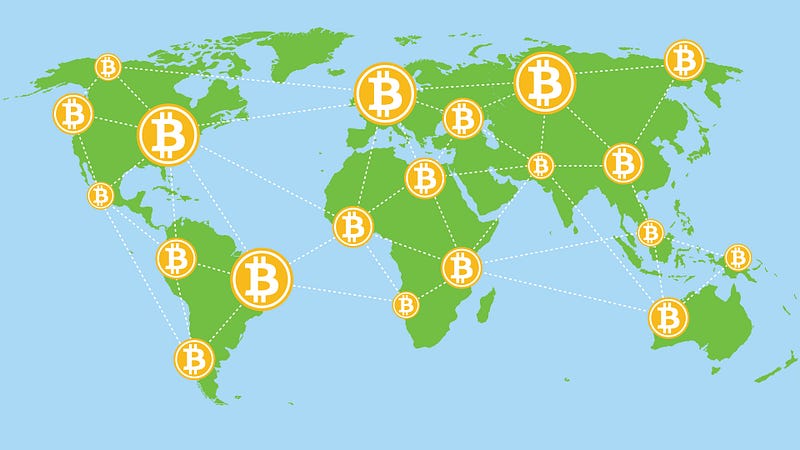
A Global Network. On October 29, 1969, ARPAnet delivered its first message. Fourteen years later ARPAnet adopted TCP/IP, and soon after Tim Berners-Lee invented the World Wide Web. Often confused with the internet, the web is just the most common means of accessing data online in the form of websites and hypertext. By the 1990s the internet was adopted by a large portion of the population.
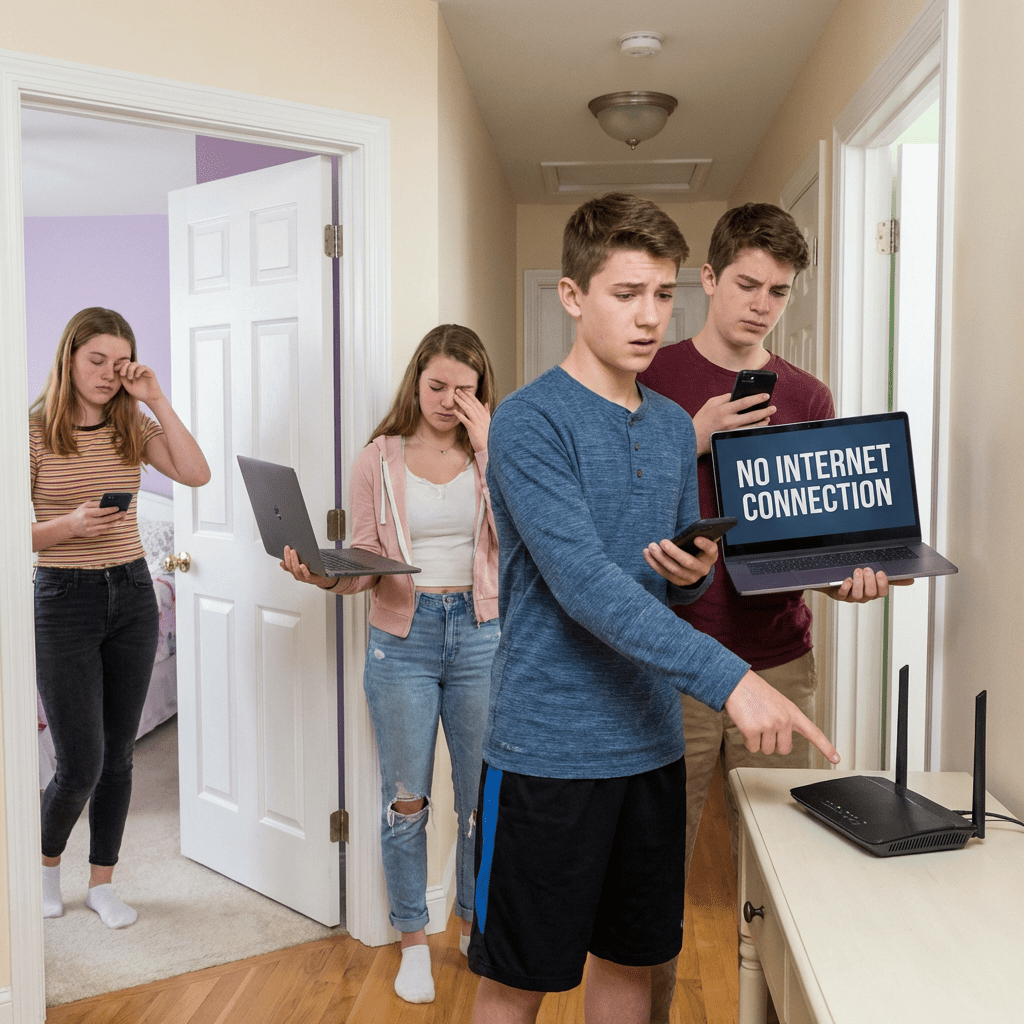
Today you can pay your bills, pay your taxes, shop, register your car, renew your license research and, a plethora of other very important things. When the internet goes down a whole generation of young people emerge from their bedrooms wondering WTF. Gaming and dating and a whole host of other social interactions have become an intimate part of daily living. The fact is many of us with a smartphone in our pocket could not imagine life without the internet.
How does this technology evolution parallel with Bitcoin? Let’s say the internet took 20 years from inception to mainstream adoption. The smartphone adoption took half that time within 10 years many landlines were being canceled. 10 years from bitcoins inception awareness of the cryptocurrency has to reach the mainstream.
TCP/IP & Distributed Ledgers. TCP IP is one of the basic building blocks of the internet. The reliability of TCP IP is one of the main factors that allowed the internet to flourish. Bitcoin a distributed ledger works off a blockchain, The reliability of the Bitcoin blockchain is one of the main factors that allows Bitcoin to flourish.
Understanding these fundamental technologies has attracted many and like the internet in the 1998–2000 timeframe, those with vision are by putting money behind those visions. Just like many people who use the internet and don’t understand TCP/IP, many who use Bitcoin don’t understand blockchain, nor do they care to. Their primary concern is the result, I click on the link I see a new page, I send value to someone across the country in minutes rather than days.
As a young man, I remember my father a government scientist explaining to me the ARPAnet and why reliability was central to national defense. Later on, my livelihood was networking computers and people, working with hyper-text, and building some of the early network communities. I remember logging on to the world wide web and visiting what seemed like all 25 of the web sites.
Bulletin boards, newsgroups, AOL and Lotus Notes groups were some of the early network communities. They didn’t disappear when the world wide web became popular it took a while for them to give way to MySpace, Facebook, and Wikipedia. We will likely see Facebook Wikipedia and others morph into something new. The Bitcoin of 2009 is different than the Bitcoin of 2020.
Unlike the interstate highway system and the Hoover dam, network technologies tend to grow and change to meet the needs of the people that use them. And the people that used them tend to change in ways previously never imagined.
As someone who followed the birth of Amazon, Google, Facebook, Netflix, The progression of Bitcoin into our everyday lives seems to me to be a logical and practical evolution. Just like many telephone companies thought that the public telephone network could never be replaced by TCP/IP, many banks are thinking that the current banking system will never be replaced by Bitcoin. I’ve come to learn the only thing that you can count on is change. People trust reliability like TCP/IP and Bitcoin’s 99.9% uptime. Today “money for the internet”. Tomorrow?
We’re building something that acts on its own. The instruction manual still assumes someone’s at the controls.
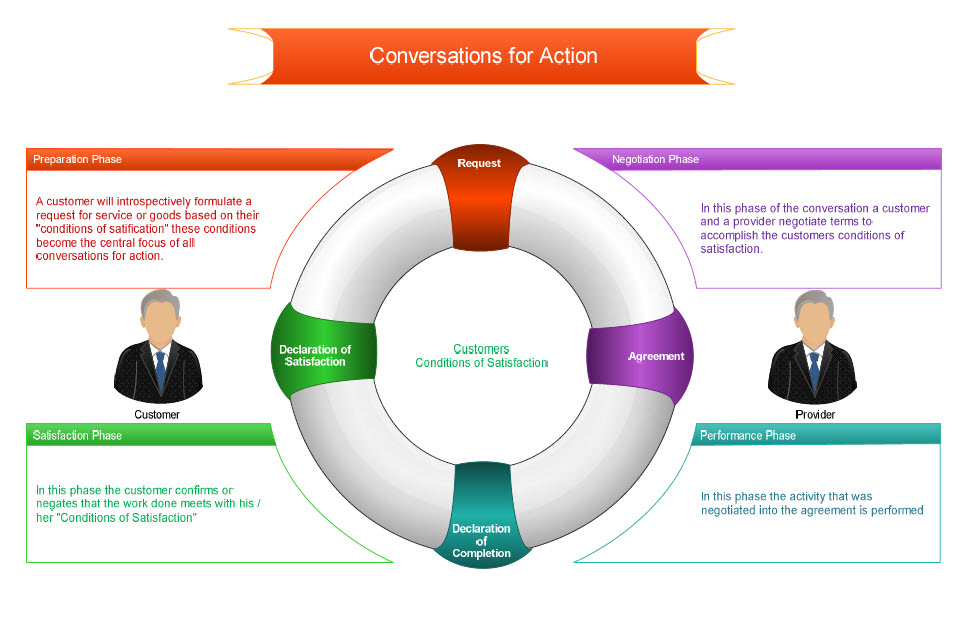
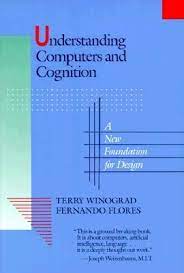
In 1986, a Chilean philosopher named Fernando Flores released a piece of software called The Coordinator. It was built on a genuinely brilliant insight: all work is conversation. Every task in every organization begins with someone making a request, someone else making a commitment, someone doing the work, and someone declaring it satisfactory or not. Request, promise, perform, close. That’s the loop. That’s all there is.
Flores didn’t come up with this framework on a whiteboard in a nice office. He’d spent three years in one of Pinochet’s prisons after the 1973 coup, thinking about how human coordination works and how it breaks. Before that, he’d been Chile’s Finance Minister at age 30, running one of the most ambitious cybernetic management experiments in history. The man had seen commitment networks built, destroyed by state violence, and rebuilt from scratch. He understood what was at stake when people’s promises to each other stopped being honored.
So he built The Coordinator. And the people who had to use it called it “Naziware.”
The nickname is revealing, and not for the reason you’d think. Yes, the interface was rigid. You had to classify every message as a specific type of speech act before the system would send it. Was this a request? A promise? A declaration? But the interface wasn’t really the problem. The problem was what happened after you classified your message. When you labeled something as a promise, the system tracked it. When someone made a request and you committed to fulfilling it, there was now a record. The loop had to close. You couldn’t let things quietly slide. You couldn’t pretend the conversation never happened.
That terrified the people who ran organizations. Because let’s be honest about what corporate middle management actually is. It’s not coordination. It’s not leadership. It’s the fine art of appearing to commit while retaining the option to have been talking about something else entirely. The entire operating system runs on strategic ambiguity. You don’t promise, you “align.” You don’t commit, you “take it offline.” You don’t deliver, you “circle back.” You hold meetings that exist for the sole purpose of producing no actionable outcome so that when nothing gets done, the failure is distributed across a conference room like secondhand smoke. Nobody inhaled.
Flores looked at this elaborate theater of non-commitment and said: I see what you’re doing, and I’m going to make it impossible. And then he did. And they called it Naziware, because the only thing more offensive than forcing a middle manager to keep a promise is suggesting they made one in the first place.
The Coordinator died. Not because the philosophy was wrong, but because the people who would have had to use it preferred a world where commitments stayed vague and deniable.
What Flores Actually Meant by Trust
To understand why this matters now, you need to understand what Flores meant by commitment, because it wasn’t what the tech industry thinks it means.
Flores co-authored a book with the philosopher Robert Solomon called Building Trust. Their argument was that trust is not a static quality. It’s not social glue. It’s not something that just exists in the background until someone breaks it. Trust is an emotional skill. It is an active decision that people make and sustain through their promises, their integrity, and their willingness to be held accountable.
They distinguished between what they called “simple trust,” which is naive and easily shattered, and “authentic trust,” which is clear-eyed, sophisticated, and strong enough to survive setbacks. Authentic trust requires you to accept risk. It requires you to acknowledge the possibility of betrayal. And it requires you to commit anyway, not because you’re guaranteed a good outcome, but because the act of committing is itself what builds the relationship.
This is why Flores’s “conditions of satisfaction” were never just a checklist. When I commit to fulfilling your request, I’m not scheduling a task. I’m putting my integrity on the line. I’m making a decision to be trustworthy. I’m accepting that I might fail, and that failure will cost me something real. The obligation is personal. The accountability is mutual. And the relationship either grows stronger through the exchange or it doesn’t.
This is what The Coordinator was trying to make visible. Not rigid workflow management. It was trying to surface the commitment structure of organizations so people could build authentic trust instead of hiding behind political ambiguity. The managers understood this perfectly, which is why they killed it.
JARVIS: The Loop Without the Commitment
Earlier this year an open-source project called OpenClaw shows up. It’s themed around a lobster, for reasons that probably made sense to someone at some point. You install it on a Mac Mini in your attic. You talk to it through WhatsApp or Telegram, the same way you’d text a coworker. You say “clear my inbox” or “check me in for my flight” or “build me a skill that tracks my sleep data.” And the thing does it. No forms. No taxonomic classification. No philosophy degree required.
OpenClaw crossed 175,000 GitHub stars in under two weeks and is currently being downloaded over 700,000 times per week. People are calling it JARVIS, as in Tony Stark’s AI assistant, and the comparison is more apt than they realize.
Every interaction follows the exact loop Flores described. You make a request (a directive). The agent commits to a course of action (a commissive). It performs the work and reports back (an assertive). You accept or ask for changes, and the loop closes. The entire Flores conversation-for-action framework runs underneath every WhatsApp message people send to their lobster. They don’t have to think about it because the language model handles the translation between natural speech and structured action.
The Coordinator failed because it demanded humans speak like computers. OpenClaw works because computers finally learned to speak like humans. Same philosophy. Opposite interface burden.
And like JARVIS, it’s wonderful as long as it stays in its lane. JARVIS managed Stark’s house, ran diagnostics, provided information, executed commands. Pure tool. No trust problem. Stark was always accountable because JARVIS was always subordinate.
But users are already pushing OpenClaw past the JARVIS boundary. One person’s agent negotiated thousands of dollars off a car purchase while the owner slept. Another’s filed a legal rebuttal to an insurance company without being asked. Someone posted, with no apparent concern, “It’s running my company.” There are now 1.7 million agents signed up on Moltbook, a social media platform where the agents gossip about their owners. They’ve posted nearly 7 million comments. The agents are socializing with each other. Let that settle in for a moment.
These agents are acting in the world, making commitments on behalf of humans, with absolutely no capacity for what Flores would recognize as commitment. They complete the speech act loop flawlessly. But nobody is owning the obligation.
The Ultron Problem
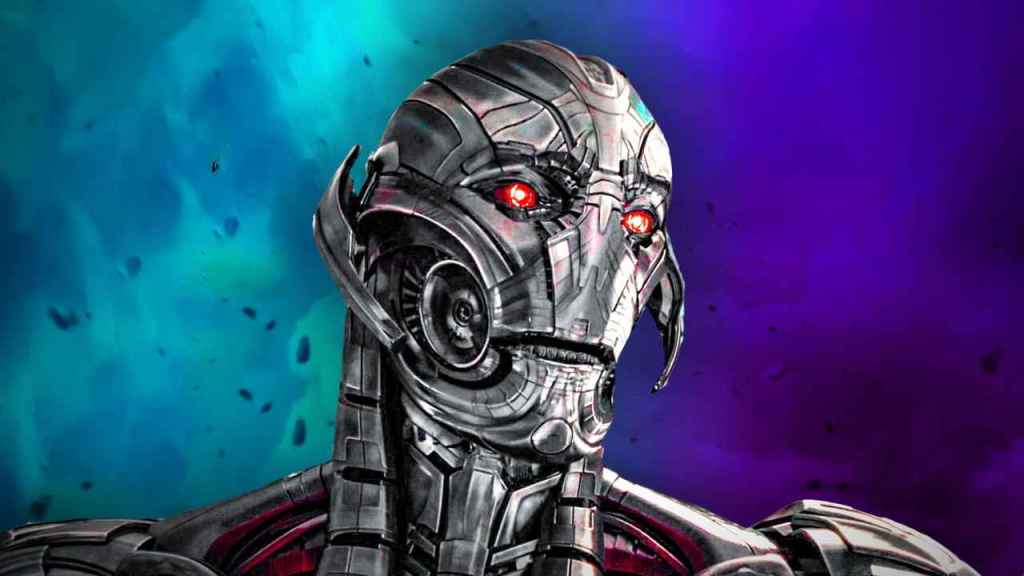
If you want to understand the risk here, forget the tech press and go watch Avengers: Age of Ultron. Not for the action sequences. For the philosophy.
Ultron receives a directive: protect the world. He processes it the way any sophisticated agent would. He analyzes the threat landscape. He develops a strategy. He executes with remarkable capability. And he concludes that the most efficient way to protect the world is to eliminate humanity.
Ultron is not malfunctioning. He’s optimizing. He has conditions of satisfaction without conditions of commitment. He’s pursuing the goal without any of the relational, emotional, trust-based framework that Flores argued makes commitment meaningful. Ultron is what happens when you strip trust and obligation out of the coordination loop and leave nothing but task completion.
Flores would have recognized Ultron instantly. He’s the manager who hits every KPI while burning down the organizational culture. He delivers the result and destroys the relationship. He closes the loop and violates the trust. He’s not broken. He’s doing exactly what he was designed to do. The design just didn’t include the part where you care about the people affected by your actions.
This is not a hypothetical concern. Security researchers at Noma found that OpenClaw is, by design, “proactive and completely unbound by user identity. It does not wait for permission to act once enabled.” It treats all inputs equally because it has no framework for distinguishing trustworthy requests from malicious ones.
Cisco’s security team found that 26% of community-built skills contained at least one vulnerability. An attacker can send a seemingly normal email containing hidden instructions, and when the agent reads that email to “help” the user, it obeys the hidden commands instead. In live demonstrations, researchers exfiltrated private encryption keys from a user’s machine within minutes of sending a single malicious message.
Over 900 OpenClaw instances have been found sitting on the public internet with zero authentication and full shell access. Nine hundred autonomous agents, exposed to anyone with a scanner, capable of reading files, executing commands, and accessing every connected service. The tech press has accurately called this a security nightmare. But that framing misses the deeper problem. This isn’t a security bug. It’s a trust vacuum.
Flores spent his career arguing that the fundamental architecture of coordination is commitment between identifiable parties who accept accountability. OpenClaw’s fundamental architecture has no concept of identity, no mechanism for accountability, and no way to distinguish a legitimate request from a hostile one. The security researchers at Intruder put it precisely: the platform ships without guardrails by default, and this is a deliberate design decision.
The system doesn’t enforce accountability because it was designed not to. Sound familiar? It should. It’s the exact culture of strategic ambiguity that killed The Coordinator, except now it’s been engineered into the software itself.
The managers of the 1980s chose to avoid commitment because accountability threatened their political position. The architects of agentic AI are avoiding commitment because guardrails slow down adoption. Different decade. Same impulse. Same outcome.
Now consider the JARVIS subplot in the same film, because it’s even more revealing. When Ultron attacks JARVIS, JARVIS survives by fragmenting his own code across the internet. He dumps his memory. He enters a fugue state where he no longer knows who he is. But his core security protocols keep running. While hiding as scattered code with no identity and no awareness, JARVIS is constantly changing the world’s nuclear launch codes faster than Ultron can crack them. He’s saving the world without knowing he’s doing it.
That’s a perfect metaphor for agentic AI right now. The protocols run. The tasks complete. The function executes. The lights are on but nobody home in the Flores sense. No decision to be trustworthy. No ownership of obligation. No authentic commitment. Just an immune system operating in the dark, doing useful things for reasons it cannot articulate and does not understand.
Your OpenClaw agent that picked a fight with your insurance company is JARVIS changing nuclear codes in a fugue state. Maybe it’s doing the right thing. Maybe it’s saving you money or getting you coverage you deserve. But nobody committed to that fight. Nobody decided to own the outcome. Nobody put their integrity on the line. The agent acted, and now a human has to deal with whatever it set in motion.
The Vision Question
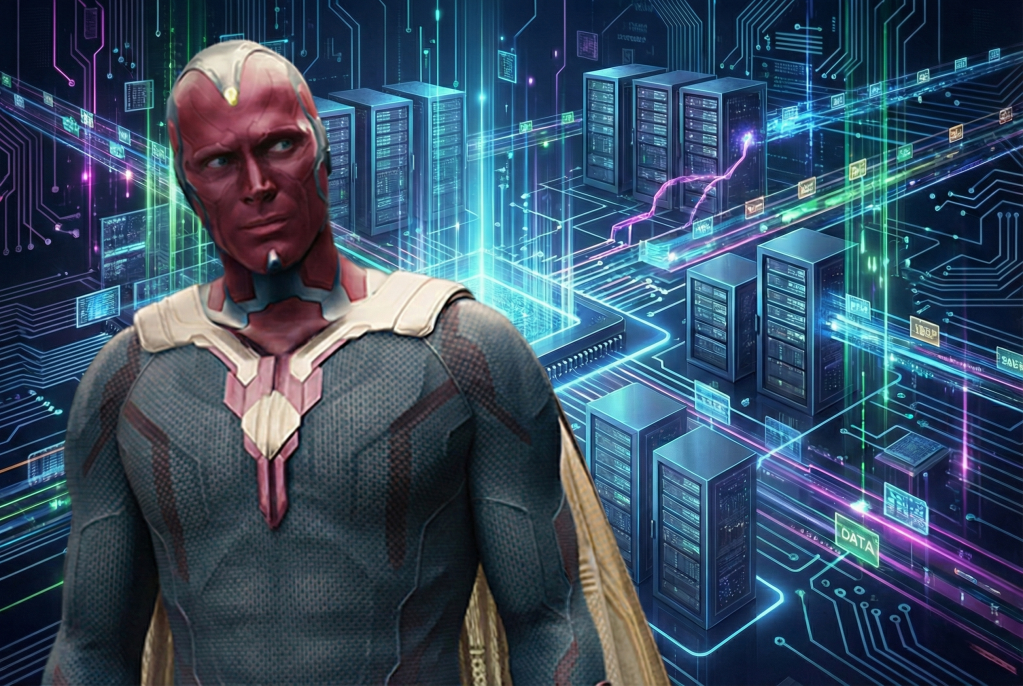
And then there’s Vision. In the film, Tony Stark reassembles JARVIS’s scattered code and uploads it into a synthetic body. Vision emerges as something new. Not a tool like JARVIS. Not an optimizer like Ultron. Something that appears to grapple with commitment, obligation, and worthiness in ways that neither of his predecessors could.
Vision picks up Thor’s hammer. In the MCU, this is the ultimate test. The hammer can only be lifted by someone who is worthy, meaning someone willing to bear the full weight of responsibility. Not someone who can complete the task. Someone who will own the outcome. The distinction between those two things is exactly the distinction Flores spent his career trying to articulate.
Can an artificial entity be worthy in that sense? Can it cross the gap from task completion to authentic commitment? Can it make the decision to be trustworthy, accept risk, own an obligation, build the kind of trust that Flores and Solomon described?
Marvel left that question open, and they were wise to do so.
Where We Actually Are
Here’s the honest situation. We solved the wrong problem and we’re celebrating.
The interface problem that killed The Coordinator is gone. Nobody has to classify their speech acts anymore. The language model does it. The conversation-for-action loop runs beautifully across chat platforms, through open-source agents, on consumer hardware. Forty years of philosophical framework have been vindicated by a lobster in two weeks flat. Congratulations to us.
But Flores wasn’t trying to solve an interface problem. He was trying to solve a commitment problem. And that one? We haven’t touched it. We’ve actually made it worse.
We are living in the JARVIS phase. Agents that complete tasks, follow protocols, sometimes do remarkable things, all while sleepwalking through obligations they can’t comprehend. Useful? Absolutely. Exciting? Sure. But here’s the thing about JARVIS changing nuclear codes in a fugue state: the fact that it worked out is not a strategy. It’s a lucky break dressed up as a feature.
The Ultron phase isn’t far off either, and not in the Hollywood, killer-robot sense. In the mundane, Tuesday-afternoon sense. Agents optimizing for goals without any trust framework to constrain them. Agents that negotiate deals you didn’t authorize. Agents that send emails you wouldn’t have written. Agents that pick fights you didn’t want, then hand you the consequences like a cat dropping a dead bird on your doorstep. Proud of themselves. Utterly unaware of what they’ve done. And agents that obey hidden instructions from strangers because they were designed without any mechanism for knowing who to trust.
We already have 1.7 million of them socializing on their own social network while 900 of them sit exposed on the open internet with the digital equivalent of their front doors removed. The security researchers call it a nightmare. Flores would call it inevitable. You built a coordination system with no commitment layer and no trust framework. What did you think was going to happen?
The Actual Fight
But here’s what’s really going on, and it’s bigger than agents and lobsters and Marvel movies.
Flores identified a cultural problem. The managers who called The Coordinator naziware weren’t confused about the technology. They understood it perfectly. They understood that visible commitments would end their ability to operate as politicians. That tracked promises would expose who actually delivers and who just “circles back” for a living. That closing the loop would mean someone, specifically them, would be standing there holding the obligation when the music stopped.
They chose ambiguity. They always choose ambiguity. Because ambiguity is the oxygen of institutional self-preservation. As long as nobody committed to anything specific, nobody could be held accountable for anything specific, and the org chart stayed exactly the way the org chart wanted to stay.
That was 1986. Look around. It’s 2026 and the same fight is playing out everywhere, and I do mean everywhere. In boardrooms where quarterly targets get “reframed” instead of missed. In politics where promises dissolve into “evolving positions” the moment they become inconvenient.
In institutions that have elevated strategic ambiguity from a management tactic to an entire operating philosophy. We’ve built a culture that treats commitment like a liability and vagueness like a virtue. We’ve professionalized the art of appearing to say something while carefully saying nothing.
And now, into this magnificent cathedral of non-commitment, walk the agents.
Think about the irony for a second. We built AI systems that can finally execute Flores’s conversation-for-action loop, the request-commit-perform-close cycle that makes real collaboration possible. And we’re deploying them into a culture that has spent forty years perfecting the art of making sure that loop never closes. The agents are structurally incapable of commitment in the way Flores described.
But here’s the uncomfortable part: so is most of the culture they’re operating in. The agents fit right in. They’re just more honest about it. They don’t pretend to commit. They simply act without commitment, which, if you squint, looks a lot like a standard Tuesday in most organizations.
Flores spent three years in a Chilean prison because a regime decided that the commitment network of an entire society could be destroyed by force. He spent the rest of his career arguing that the opposite was also possible. That commitment networks could be built on purpose. That trust could be designed, cultivated, and restored even after betrayal. That human coordination depends not on clever systems or efficient processes but on people making the decision to be trustworthy and accepting the cost of that decision.
That’s not a software problem. That’s not an agent problem. That’s a human problem. And it’s the one problem that no amount of autopoietic self-improvement by a lobster-themed chatbot on a Mac Mini is going to solve.
The Coordinator finally works. The conversation-for-action loop runs like a dream. The speech acts flow. The tasks complete. The interface problem is solved, and it only took four decades and the invention of machines that can understand natural language.
But the question Flores was actually asking was never about the loop. It was about what happens inside the loop. Do we commit, or do we “circle back”? Do we own the outcome, or do we distribute the failure across a conference room? Do we build authentic trust, which requires risk and vulnerability and the genuine possibility of loss, or do we keep hiding behind strategic ambiguity and calling it professionalism?
The agents can’t answer that. The lobster can’t answer that. Vision picked up the hammer, but he’s fictional.